Tralokinumab

Tralokinumab (ADBRY) — Drug Profile | TrialistMD
TRIALISTMD.COM DRUG PROFILE
IL-13 Antagonist · IgG4 mAb · Dermatology · Atopic Dermatitis

Tralokinumab-ldrm

ADBRY™  ·  LEO Pharma A/S
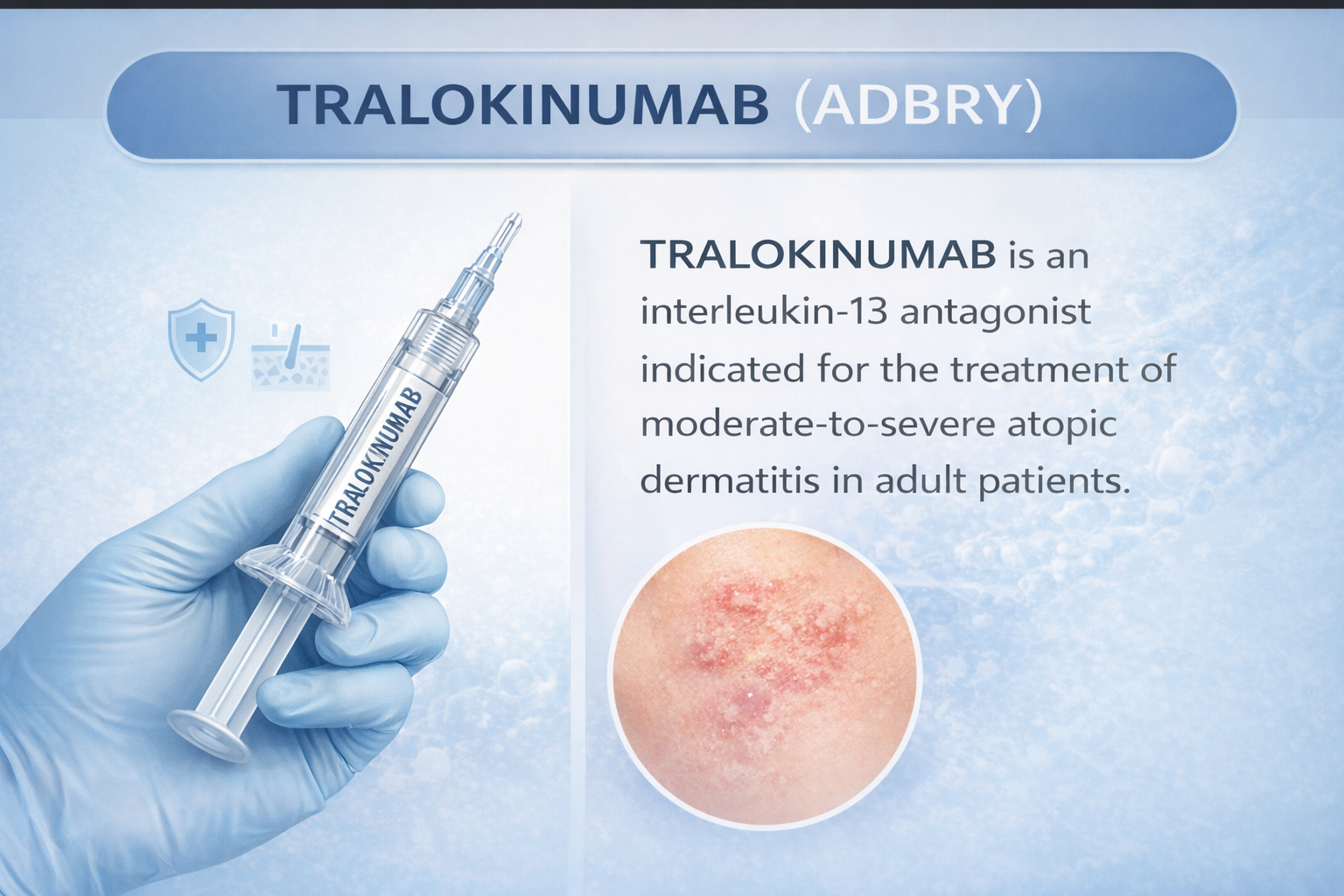
A fully human IgG4 monoclonal antibody that selectively neutralizes interleukin-13 (IL-13), a key Th2 cytokine driving atopic dermatitis. Indicated for moderate-to-severe atopic dermatitis in adults inadequately controlled by topical therapies — the first selective IL-13 antagonist approved in the US, supported by three pivotal Phase 3 trials (ECZTRA 1, 2, and 3).
BLA Number761180
FDA ApprovalDecember 2021
Priority StatusStandard Review / NME
Formulation150 mg/mL SC Prefilled Syringe
Pharmacologic ClassIL-13 Antagonist (IgG4 mAb)
ApplicantLEO Pharma A/S

Overview

§1
Indication
Moderate-to-Severe AD
Adults not adequately controlled by topical prescription therapies
Mechanism
IL-13 Selective Antagonist
Fully human IgG4 monoclonal antibody · 147 kDa
Dose & Schedule
300 mg Q2W
Loading 600 mg at Week 0 · SC injection
Phase 3 Program
3 Pivotal Trials
ECZTRA 1, 2, 3 · N=1,934 total efficacy population
Mechanism of Action: Tralokinumab-ldrm is a human IgG4 monoclonal antibody that specifically binds human interleukin-13 (IL-13) and inhibits its interaction with the IL-13 receptor α1 and α2 subunits (IL-13Rα1 and IL-13Rα2). By blocking the IL-13Rα1/IL-4Rα receptor complex, tralokinumab inhibits IL-13–induced proinflammatory cytokine and chemokine release and IgE production. Unlike dupilumab, which blocks IL-4Rα (inhibiting both IL-4 and IL-13), tralokinumab selectively targets IL-13 only.
🎯
Binds Free IL-13
High-affinity binding to circulating IL-13 cytokine
🔒
Receptor Blockade
Blocks IL-13Rα1 and IL-13Rα2; prevents IL-13Rα1/IL-4Rα complex signaling
⬇️
Th2 Suppression
↓ cytokines, ↓ chemokines (CCL17/18/26), ↓ IgE; suppressed Th17/Th22 genes
🩹
Skin Restoration
↓ Keratin 16, ↓ Ki-67; ↑ Loricrin (barrier protein)

Pharmacodynamic Biomarkers

TARC/CCL17 ↓Periostin ↓IL-22 ↓LDH ↓Serum IgE ↓Keratin 16 ↓Ki-67 ↓CCL18 ↓CCL26 ↓Loricrin ↑

Clinical Trial Programme

§1.2
TrialNCT NumberDesignN RandomisedDurationComparatorPrimary Endpoint
ECZTRA 1NCT03131648R, DB, PC — Monotherapy80252 weeksPlaceboIGA 0/1 + EASI-75 at Week 16
ECZTRA 2NCT03160885R, DB, PC — Monotherapy79452 weeksPlaceboIGA 0/1 + EASI-75 at Week 16
ECZTRA 3NCT03363854R, DB, PC — Combination with TCS38032 weeksPlacebo + TCSIGA 0/1 + EASI-75 at Week 16
Dose-Finding TrialNot reportedR, DB — Safety poolIncluded in safety poolNot reportedMultiple doses vs. PlaceboSafety/Dose selection
Vaccine Response TrialNot reportedR, DBIncluded in safety poolNot reportedPlaceboImmune response to non-live vaccines
Abbreviations: DB, double-blind; PC, placebo-controlled; R, randomised; TCS, topical corticosteroids (mometasone furoate 0.1% cream). Source: FDA PI BLA 761180 (Ref ID: 4911283) §14; FDA Medical Review BLA 761180 (Ref ID: 4909926).

Competitive Landscape

§1.3
Drug (INN)BrandTargetUS Approval DateFormulationApproved Population
DupilumabDUPIXENTIL-4Rα (IL-4/IL-13 dual)March 28, 2017300 mg SCAdults & pediatric ≥6 months
Tralokinumab-ldrmADBRYIL-13 selectiveDecember 2021300 mg Q2W SCAdults only
LebrikizumabEBGLYSSIL-13 selectiveSeptember 13, 2023250 mg Q2W SCAdults & adolescents ≥12 years

Key Drug Information

§1.4
ParameterDetail
Proprietary NameADBRY™
INN / Generic NameTralokinumab-ldrm
Code NamesCAT-354 (development code)
ManufacturerLEO Pharma A/S, Industriparken 55, DK-2750 Ballerup, Denmark · US License No. 2169
US DistributorLEO Pharma Inc., Madison, NJ 07940, USA
Pharmacologic ClassInterleukin-13 (IL-13) antagonist; fully human IgG4 monoclonal antibody
Antibody DetailsHuman IgG4 · 1,326 amino acids · ~147 kDa · Produced in mouse myeloma cells by recombinant DNA technology
Dosage Form & Strength150 mg/mL solution in single-dose prefilled syringe with needle guard (27G × ½ inch, siliconized Type-1 glass, no latex)
NDC Numbers50222-346-02 (2-syringe carton) · 50222-346-04 (4-syringe multipack)
Inactive IngredientsAcetic acid (0.3 mg), polysorbate 80 (0.1 mg), sodium acetate trihydrate (6 mg), sodium chloride (5 mg), water for injection; pH ~5.5
Storage2–8°C (36–46°F) refrigerated; original carton, protect from light; ≤25°C ≤14 days after removal; do not freeze or shake
Boxed WarningNone
PI Revision DateDecember 2021
Source: FDA Prescribing Information BLA 761180 (Ref ID: 4911283), revised 12/2021.

Baseline Characteristics

§2
Pooled Trial Summary: Baseline characteristics are presented individually for ECZTRA 1 (N=802 randomized, 800 dosed), ECZTRA 2 (N=794 randomized, 770 dosed), and ECZTRA 3 (N=380 randomized, 368 dosed). All three used the Full Analysis Set (FAS = all randomized and dosed subjects). Demographic and disease characteristics were well-balanced across treatment arms within each trial.

Demographics

§2.1 · Table 12, FDA Medical Review BLA 761180
ParameterECZTRA 1 (Monotherapy)ECZTRA 2 (Monotherapy)ECZTRA 3 (+TCS)
Tralokinumab Q2W
(N=601)
Placebo
(N=197)
Tralokinumab Q2W
(N=577)
Placebo
(N=193)
Tralokinumab+TCS
(N=243)
Placebo+TCS
(N=123)
Sex
Male, n (%)350 (58%)122 (62%)347 (60%)108 (56%)120 (49%)83 (67%)
Female, n (%)251 (42%)75 (38%)230 (40%)85 (44%)123 (51%)40 (33%)
Age (years)
Mean (SD)38.6 (13.7)39.3 (15.3)36.9 (14.7)34.8 (14.0)39.1 (14.7)37.5 (14.8)
Median373634293734
Range18–9218–8218–8618–8018–7918–78
18–64 years, n (%)572 (95%)183 (93%)548 (95%)186 (96%)231 (95%)115 (94%)
65–84 years, n (%)28 (5%)14 (7%)28 (5%)7 (4%)12 (5%)8 (6%)
≥85 years, n (%)1 (<1%)01 (<1%)000
Race
White, n (%)424 (71%)137 (70%)370 (64%)123 (64%)194 (80%)81 (66%)
Asian, n (%)120 (20%)40 (20%)154 (26%)52 (26%)17 (7%)24 (19%)
Black / African American, n (%)41 (7%)17 (9%)31 (5%)9 (5%)22 (9%)12 (10%)
Other / Not reported16 (3%)3 (2%)22 (4%)9 (5%)10 (4%)6 (5%)
Source: Table 12, FDA Integrated Medical Review, BLA 761180 (Ref ID: 4909926). Population: Full Analysis Set (FAS = all randomized and dosed subjects). Arms were well-balanced. ECZTRA 3 had lower proportion of Asian subjects due to geographic distribution of enrolling sites.

Baseline Disease Characteristics

§2.2 · Table 13, FDA Medical Review BLA 761180
CharacteristicECZTRA 1 (Monotherapy)ECZTRA 2 (Monotherapy)ECZTRA 3 (+TCS)
Tralokinumab Q2W
(N=601)
Placebo
(N=197)
Tralokinumab Q2W
(N=577)
Placebo
(N=193)
Tralokinumab+TCS
(N=243)
Placebo+TCS
(N=123)
IGA Score at Baseline
IGA 3 — Moderate, n (%)296 (49%)95 (48%)296 (51%)93 (48%)127 (52%)64 (52%)
IGA 4 — Severe, n (%)305 (51%)102 (52%)281 (49%)100 (51%)116 (48%)59 (48%)
EASI Score at Baseline (scale 0–72)
Mean (SD)32.2 (13.7)32.9 (13.9)32.4 (14.3)33.1 (13.8)29.1 (12.0)30.4 (12.9)
Median28.230.328.630.825.426.2
Range16–7216–70.815.4–7216–7215.8–68.416.1–72
Worst Daily Pruritus NRS (Weekly Avg) at Baseline (scale 0–10)
Mean (SD)7.7 (1.4)7.7 (1.4)7.9 (1.5)8.0 (1.3)7.7 (1.5)7.9 (1.5)
Median7.97.98.08.18.08.0
NRS ≥4 (eligible for secondary endpoint), n (%)594 (99%)194 (98%)563 (98%)192 (99%)240 (99%)123 (100%)
Body Surface Area (BSA) Affected at Baseline (%)
Mean (SD)52.7 (24.1)54.4 (25.5)53.2 (25.4)54.3 (24.6)47.9 (23.6)49.1 (26.1)
Median505350504240
Range10–10010–10010–10011–10011–10012–100
Source: Table 13, FDA Medical Review BLA 761180 (Ref ID: 4909926). Entry criteria: IGA ≥3; EASI ≥16; BSA ≥10%; inadequate response to topical therapies. Abbreviations: BSA, body surface area; EASI, Eczema Area and Severity Index; IGA, Investigator’s Global Assessment; NRS, numeric rating scale; TCS, topical corticosteroids.

Pooled Baseline Summary Cards

§2.3
Mean Age
37 yrs
Range 18–92 years across trials
Male Sex
58%
ECZTRA 1+2 monotherapy pooled
IGA 3 / IGA 4
50% / 50%
Equal moderate and severe disease
Mean EASI
~32
Scale 0–72; entry criterion ≥16
Mean BSA
~53%
Extensive disease; entry criterion ≥10%
Mean Pruritus NRS
7.7–8.0
Severe itch; 98–100% had NRS ≥4
Asthma (Comorbid)
39%
Atopic march comorbidity
Hay Fever
49%
Allergic rhinitis comorbidity
Food Allergy
36%
Comorbid at baseline
Allergic Conjunctivitis
21%
Key for AE interpretation
Comorbidity data from safety population (N=1,964 treated across 5 trials). Source: PI §6.1 BLA 761180 (Ref ID: 4911283).

Efficacy

§3
Co-Primary Endpoints & Statistical Framework: All three pivotal trials (ECZTRA 1, 2, 3) used two co-primary endpoints assessed at Week 16: (1) IGA 0 or 1 (“clear” or “almost clear”) and (2) EASI-75 (≥75% improvement in EASI from baseline). Non-responder imputation (NRI) was used — subjects who received rescue medication or had missing data were counted as non-responders. The significance threshold was α=0.025 (one-sided) per co-primary endpoint. The CMH test was stratified by region and baseline IGA score.

ECZTRA 1 — Week 16 Primary Endpoints

§3.1 · NCT03131648 · Monotherapy · 52 Weeks
ECZTRA 1 · IGA 0/1 AT WEEK 16 N=601 tralokinumab, N=197 placebo · FAS · NRI
Tralokinumab 300 mg Q2W
16%
Placebo
7%
Difference from placebo: +9% (95% CI: 4%–13%) · p<0.001
ECZTRA 1 · EASI-75 AT WEEK 16 N=601 tralokinumab, N=197 placebo · FAS · NRI
Tralokinumab 300 mg Q2W
25%
Placebo
13%
Difference from placebo: +12% (95% CI: 6%–18%) · p<0.001

ECZTRA 2 — Week 16 Primary Endpoints

§3.2 · NCT03160885 · Monotherapy · 52 Weeks
ECZTRA 2 · IGA 0/1 AT WEEK 16 N=577 tralokinumab, N=193 placebo · FAS · NRI
Tralokinumab 300 mg Q2W
21%
Placebo
9%
Difference from placebo: +12% (95% CI: 7%–17%) · p<0.001
ECZTRA 2 · EASI-75 AT WEEK 16 N=577 tralokinumab, N=193 placebo · FAS · NRI
Tralokinumab 300 mg Q2W
33%
Placebo
10%
Difference from placebo: +22% (95% CI: 17%–28%) · p<0.001

ECZTRA 3 — Week 16 Primary Endpoints

§3.3 · NCT03363854 · Combination with TCS · 32 Weeks
ECZTRA 3 · IGA 0/1 AT WEEK 16 N=243 tralokinumab+TCS, N=123 placebo+TCS · FAS · NRI
Tralokinumab 300 mg Q2W + TCS
38%
Placebo + TCS
27%
Difference from placebo: +11% (95% CI: 1%–21%) · p=0.025
ECZTRA 3 · EASI-75 AT WEEK 16 N=243 tralokinumab+TCS, N=123 placebo+TCS · FAS · NRI
Tralokinumab 300 mg Q2W + TCS
56%
Placebo + TCS
37%
Difference from placebo: +20% (95% CI: 9%–30%) · p<0.001

IGA 0/1 Response — Time Course

§3.4 · ECZTRA 1 + ECZTRA 2
Source: FDA PI BLA 761180 Table 2 (Ref ID: 4911283). Week 0 = 0% (no responders at baseline by definition). Week 16 values directly reported. Intermediate timepoints (Weeks 2, 4, 8) not explicitly tabulated in the PI or available from source documents — marked as null per data accuracy rules.

Secondary Endpoints — Pruritus NRS

§3.5
WORST DAILY PRURITUS NRS ≥4-POINT REDUCTION AT WEEK 16 Among subjects with baseline NRS weekly avg ≥4
ECZTRA 1 — Tralokinumab Q2W
20%
ECZTRA 1 — Placebo
10%
ECZTRA 2 — Tralokinumab Q2W
25%
ECZTRA 2 — Placebo
9%
ECZTRA 3 — Tralokinumab+TCS
46%
ECZTRA 3 — Placebo+TCS
35%
ECZTRA 1: Difference +10% (95% CI: 4%–15%) · ECZTRA 2: +16% (95% CI: 11%–21%) · ECZTRA 3: +11% (95% CI: 1%–22%)

Maintenance of Response (Weeks 16–52 / 16–32)

§3.6
EndpointECZTRA 1ECZTRA 2ECZTRA 3 (to Wk 32)
IGA 0/1 maintained — Q2W arm51% (20/39)60% (32/53)89% (40/45)
IGA 0/1 maintained — Q4W arm39% (14/36)50% (22/44)76% (35/46)
IGA 0/1 maintained — Placebo arm47% (9/19)23% (6/26)N/A (no placebo rerandom.)
EASI-75 maintained — Q2W arm60% (28/47)57% (43/76)92% (60/65)
EASI-75 maintained — Q4W arm49% (28/57)55% (38/69)90% (56/62)
EASI-75 maintained — Placebo arm33% (10/30)20% (8/40)N/A
Maintenance analyses restricted to Week 16 responders re-randomized at Week 16 (ECZTRA 1+2: IGA 0/1 or EASI-75 at Wk 16 → Q2W, Q4W, or placebo for 36 weeks; ECZTRA 3: IGA 0/1 or EASI-75 at Wk 16 → Q2W+TCS or Q4W+TCS for 16 weeks). Source: FDA PI §14, BLA 761180 (Ref ID: 4911283), Table 2.

Patient-Reported Outcomes

§3.7
PRO InstrumentFindingTimepoint
Worst Daily Pruritus NRS (11-point scale)≥4-point reduction: 20–25% (mono) vs 9–10% (placebo); 46% (combo+TCS) vs 35% (placebo+TCS)Week 16
EASI-90 (≥90% improvement)Higher proportion in tralokinumab 300 mg Q2W arm vs. placebo in all three pivotal trialsWeek 16
Source: FDA PI §14 BLA 761180 (Ref ID: 4911283). EASI-90 numerical values not explicitly tabulated in the PI — qualitative statement only per §14.

Safety & ADRs

§4
No Boxed Warning. ADBRY (tralokinumab-ldrm) does not carry a boxed warning in the approved US prescribing information.
Safety Population (Controlled)
1,964
Subjects treated with tralokinumab across 5 AD trials
Long-Term Exposure
807
Subjects treated for ≥1 year
Mean Age (Safety Pop.)
37 yrs
Range includes up to 92 years
Most Common ADR (≥1%)
URTI 23.8%
Conjunctivitis 7.5% · ISR 7.4%

Warnings & Precautions

§4.1 · PI §5
  • Hypersensitivity (§5.1): Anaphylaxis and angioedema have been reported. Discontinue immediately and initiate appropriate therapy if a serious hypersensitivity reaction occurs.
  • Conjunctivitis & Keratitis (§5.2): Both occurred more frequently with tralokinumab than placebo. Advise patients to report new onset or worsening eye symptoms. Most cases resolved or were resolving during treatment period.
  • Parasitic (Helminth) Infections (§5.3): Patients with pre-existing helminth infections were excluded from trials. Effect of tralokinumab on helminth immune response unknown. Treat pre-existing infections before initiating therapy. If patient becomes infected while on treatment and does not respond to antihelminth treatment, discontinue until infection resolves.
  • Risk of Infection with Live Vaccines (§5.4): ADBRY may alter immunity and increase infection risk following live vaccine administration. Complete all age-appropriate vaccinations prior to therapy. Avoid live vaccines during treatment.

ADR Frequency Table — Weeks 0–16

§4.2 · PI Table 1
Adverse ReactionTralokinumab Mono
(N=1,180)
n (%)
Placebo Mono
(N=388)
n (%)
Tralokinumab+TCS
(N=243)
n (%)
Placebo+TCS
(N=123)
n (%)
Upper respiratory tract infectionsa281 (23.8%)79 (20.4%)73 (30.0%)19 (15.4%)
Conjunctivitisb88 (7.5%)12 (3.1%)33 (13.6%)6 (4.9%)
Injection site reactionsc87 (7.4%)16 (4.1%)27 (11.1%)1 (0.8%)
Eosinophiliad17 (1.4%)2 (0.5%)3 (1.2%)0
a Cluster: URTI, viral URTI, pharyngitis, nasopharyngitis (mainly common cold). b Cluster: conjunctivitis and allergic conjunctivitis. c Cluster: injection site pain, erythema, swelling. d Cluster: eosinophilia and eosinophil count increased. Monotherapy: pooled ECZTRA 1+2 (Wks 0–16). Combination: ECZTRA 3 (Wks 0–16). Source: PI §6.1 Table 1, BLA 761180 (Ref ID: 4911283).

Conjunctivitis & Keratitis — Detailed Data

§4.3 · PI §6.1
EventTralokinumabPlaceboNotes
Conjunctivitis (incl. allergic) — initial 16 wks (5-trial pool)7.5%3.1%29 vs. 12 events/100 PY; 126 subjects, 145 events; 114 resolved; 2 discontinuations
Conjunctivitis — maintenance Wk 16–52 (Q2W)8.9%20 events/100 PY; 1 severe event; 1 discontinuation
Conjunctivitis — maintenance Wk 16–52 (Q4W)6.3%14 events/100 PY
Keratitis (incl. keratoconjunctivitis) — initial 16 wks0.5%0%Including 1 ulcerative keratitis; 9 subjects, 10 events; 5 resolved; none serious or led to discontinuation
Keratitis — maintenance Wk 16–52 (Q2W)0.6%1 subject (ulcerative, severe; resolved after discontinuation); 1.2 events/100 PY
Keratoconjunctivitis — maintenance (Q2W)1.9%3 subjects; not serious/severe; resolved; no discontinuations; 3.6 events/100 PY
Clinical Context — Conjunctivitis: At baseline, 21% of the safety population had pre-existing allergic conjunctivitis. Across the tralokinumab arm, 56% of subjects who developed conjunctivitis events had a prior history of allergic conjunctivitis or keratoconjunctivitis. This substantially complicates attribution to the drug.

Eosinophil Counts

§4.4 · PI §6.1
ParameterTralokinumabPlaceboNotes
Eosinophilia >5,000 cells/mcL — initial 16 wks1.2%0.3%Mean/median increase from baseline to Week 4: +190 / +100 cells/mcL; declined to baseline with continued treatment

Immunogenicity

§4.5 · PI §6.2
ParameterTralokinumabPlaceboNotes
Anti-drug antibodies (ADA) — initial 16 wks1.4%1.3%Similar incidence between arms in ECZTRA 1, 2, 3 and vaccine-response trial
Neutralizing antibodies — initial 16 wks0.1%0.2%Low incidence in both arms
ADA — across all trial periods4.6%Persistent ADA 0.9%; neutralizing antibodies 1.0%
Clinical impact of ADA positivityNo clinically meaningful differences in pharmacokinetics, safety, or efficacy in ADA-positive patients including those with neutralizing antibodies.

Discontinuations Due to AEs

§4.6 · PI §6.1
Trial / PeriodTralokinumabPlaceboLeading Reasons
ECZTRA 1+2 monotherapy — Wks 0–160.7%0%Injection site reaction (0.3%), eosinophilia (0.3%)
ECZTRA 3 (+TCS) — Wks 0–160.8%0%Injection site reaction (0.4%), conjunctivitis (0.4%)

Special Populations Safety

§4.7 · PI §8
PopulationSummary
Pregnancy (§8.1)Limited human data. Human IgG antibodies cross the placental barrier; tralokinumab may be transmitted to fetus. Animal data: no adverse developmental effects in cynomolgus monkeys at IV doses up to 100 mg/kg/week (10× MRHD) through organogenesis to parturition, and in infants followed to 6 months of age.
Lactation (§8.2)No human milk data. Maternal IgG is present in breast milk. Effects of local GI exposure and limited systemic exposure on breastfed infant are unknown. Consider clinical benefit vs. potential risk.
Pediatric Use (§8.4)Safety and effectiveness not established in pediatric patients.
Geriatric Use (§8.5)77 subjects aged ≥65 years in initial 16-week period (of 1,605 tralokinumab-exposed). Insufficient numbers to determine differential response vs. younger subjects. No significant PK differences by age.

Nonclinical Safety Summary

§4.8 · PI §13
CarcinogenicityAnimal studies to evaluate carcinogenic or mutagenic potential for tralokinumab-ldrm have not been conducted.
Reproductive Toxicity / FertilityNo effects on reproductive organs, menstrual cycle, or sperm analysis in sexually mature cynomolgus monkeys at SC doses up to 350 mg/animal (females) or 600 mg/animal (males) — both 10× MRHD. Monkeys were not mated to evaluate fertility directly.
Embryofetal / Pre/Postnatal DevelopmentNo maternal toxicity, embryofetal toxicity, malformations, or adverse morphological/functional/immunological developmental effects in cynomolgus monkey offspring at IV doses up to 100 mg/kg/week (10× MRHD), followed to 6 months of age.
Drug InteractionsTralokinumab is metabolized via catabolic pathways. No CYP-based interactions expected. Formal drug interaction studies have not been conducted. Non-live vaccine responses (Tdap, meningococcal) were not impaired vs. placebo in a dedicated vaccine-response trial.
Source: FDA PI §8.1, §8.2, §8.4, §8.5, §13.1 BLA 761180 (Ref ID: 4911283).

Pharmacology & PK

§5
Bioavailability (SC)
76%
Absolute bioavailability after SC administration
Tmax
5–8 days
Time to peak concentration post-SC dose
Half-Life (t½)
3 weeks
Terminal elimination half-life
Volume of Distribution
~4.2 L
Central compartment (Vd); limited tissue distribution consistent with IgG4 mAb
Systemic Clearance
0.149 L/day
Estimated CL at steady state
Steady-State Trough
98–101 mcg/mL
Mean (SD) trough: 98.0 (41.1) to 101.4 (42.7) mcg/mL at 300 mg Q2W
Time to Steady State
Week 16
Achieved with 600 mg loading dose + 300 mg Q2W maintenance
Dose Proportionality
Linear
Proportional exposure up to 2,100 mg (30 mg/kg IV; 3.5× MRHD) for a 70 kg subject
Metabolism
Catabolic
Proteolytic degradation to small peptides via catabolic pathways; no CYP enzyme involvement

Absorption

§5.1 · PI §12.3
SC Absorption: Absolute bioavailability was estimated at 76% after subcutaneous administration. Time to maximum concentration (Tmax) was 5 to 8 days. Exposure increased proportionally over the assessed dose range (up to 2,100 mg IV). No food effect data relevant (SC biologic).

Distribution

§5.2 · PI §12.3

The volume of distribution was estimated to be approximately 4.2 L, consistent with the limited extravascular distribution expected of a large IgG4 monoclonal antibody. Tralokinumab is primarily confined to the vascular and interstitial compartments.

Metabolism & Elimination

§5.3–5.4 · PI §12.3
ParameterDetail
Primary Metabolic PathwayCatabolic proteolysis to small peptides and amino acids; expected for all IgG monoclonal antibodies
Enzymes InvolvedNonspecific proteases; no CYP isoform involvement
Elimination RouteTypical IgG catabolism; no specific renal or hepatic excretion pathway
Terminal Half-Life3 weeks
Systemic Clearance0.149 L/day

Special Population PK

§5.5 · PI §12.3
PopulationPK EffectDose Adjustment
Age (18–92 years)No clinically significant differences in PKNone required
SexNo clinically significant differencesNone required
Body Weight >100 kgExposure decreases with increasing weight. At 300 mg Q4W, median AUC in patients >100 kg is ~1.46-fold lower vs. <100 kgQ4W interval not applicable for patients ≥100 kg — maintain Q2W
Renal Impairment (mild–moderate)No clinically significant PK differencesNone required
Renal Impairment (severe)Not studiedUnknown
Hepatic Impairment (mild)No clinically significant PK differencesNone required
Hepatic Impairment (moderate–severe)Not studiedUnknown
Race / EthnicityNot specifically studiedNone identified

Drug–Drug Interactions

§5.6 · PI §12.3
DDI Studies Not Conducted: Drug interactions with ADBRY have not been formally assessed. No CYP-based interactions are expected given the catabolic metabolic pathway of the antibody. Concomitant use with non-live vaccines did not impair antibody responses to tetanus, diphtheria, acellular pertussis, or meningococcal vaccines at 12 weeks of treatment.

Mechanism of Action

§5.7 · PI §12.1

Tralokinumab-ldrm is a human IgG4 monoclonal antibody that specifically binds human interleukin-13 (IL-13) and inhibits its interaction with the IL-13 receptor α1 and α2 subunits (IL-13Rα1 and IL-13Rα2). IL-13 is a naturally occurring cytokine of the Type 2 immune response. Tralokinumab inhibits the bioactivity of IL-13 by blocking IL-13 interaction with the IL-13Rα1/IL-4Rα receptor complex. This results in inhibition of IL-13-induced responses including the release of proinflammatory cytokines, chemokines, and IgE.

Pharmacodynamics

§5.8 · PI §12.2
Vaccine Immune Response: In a dedicated vaccine-response trial, subjects receiving 300 mg Q2W (after 600 mg loading dose) were vaccinated with a combined tetanus, diphtheria, and acellular pertussis vaccine and a meningococcal vaccine at Week 12. Antibody responses assessed 4 weeks later were similar in tralokinumab-treated and placebo-treated subjects. Immune responses to other vaccines were not assessed.
PD ParameterEffect with Tralokinumab
Systemic Th2/Th22 biomarkersDecreased TARC/CCL17, periostin, IL-22, lactate dehydrogenase (LDH), serum IgE
Skin tissue biomarkers↓ Keratin 16 (epidermal proliferation marker); ↓ Ki-67; ↑ Loricrin (barrier protein)
Gene expression (lesional skin)Suppressed Th2 pathway genes: CCL17, CCL18, CCL26; suppressed Th17- and Th22-regulated markers
Eosinophil kineticsTransient increase peaking ~Week 4 (mean +190 cells/mcL, median +100 cells/mcL); declines to baseline levels with continued treatment
Clinical relevance of biomarkersNot fully understood per PI §12.2
Source: FDA PI §12.1–12.3, BLA 761180 (Ref ID: 4911283).

Dosing & Contraindications

§6
Approved Dose
300 mg Q2W
After 600 mg loading dose at Week 0
Route
Subcutaneous
Thigh, abdomen, or upper arm
Optional Q4W
After Week 16
Only if <100 kg AND IGA 0/1 achieved
Duration
Long-term
No defined treatment duration in PI

Standard Dosing

  • Loading Dose (Week 0): 600 mg SC — four 150 mg injections at different injection sites within the same body area
  • Maintenance Dose: 300 mg SC Q2W — two 150 mg injections at different sites within the same body area; begin at Week 2
  • Q4W Option: 300 mg SC every 4 weeks may be considered after 16 weeks for patients with body weight <100 kg who achieve IGA 0 or 1 (“clear” or “almost clear”)

Dose Modifications by Population

  • Weight ≥100 kg: Q4W interval not recommended — median AUC is ~1.46-fold lower vs. <100 kg at Q4W; maintain Q2W throughout
  • Renal impairment (mild–moderate): No dose adjustment required
  • Hepatic impairment (mild): No dose adjustment required
  • Moderate–severe renal/hepatic impairment: Not studied; no recommendation available
  • Geriatric patients (≥65 years): No dose adjustment required; data limited
  • Pediatric patients: Safety and effectiveness not established; no dosing recommendation

Preparation & Administration

  • Remove from refrigerator and allow 30 minutes to reach room temperature (20–25°C / 68–77°F) before injection; do not microwave, heat, or shake
  • Inject SC into thigh or abdomen (avoid 5 cm periumbilical zone); upper arm only by caregiver
  • Each injection at different sites within same body area; rotate body area with each subsequent set; minimum 1 inch (3 cm) between individual injections
  • Avoid tender, damaged, bruised, or scarred skin
  • Visually inspect: solution should be clear to opalescent, colorless to pale yellow; discard if cloudy, discolored, or particulate matter present
  • Self-injection permitted after training; first injection under HCP supervision

Missed Dose & Concomitant Therapies

  • Missed dose: Administer as soon as possible; then resume original schedule thereafter
  • Concomitant TCS: May be used with or without topical corticosteroids
  • Topical calcineurin inhibitors: May be used but should be reserved for problem areas only (face, neck, intertriginous, genital areas)
  • Live vaccines: Avoid during treatment; complete all age-appropriate vaccinations prior to initiating therapy

Contraindications

§6.4 · PI §4
Hypersensitivity: ADBRY is contraindicated in patients who have known hypersensitivity to tralokinumab-ldrm or any excipients in ADBRY (acetic acid, polysorbate 80, sodium acetate trihydrate, sodium chloride).

Vaccination Prior to Treatment

§6.5 · PI §2.1
Pre-Treatment Vaccination: Complete all age-appropriate vaccinations as recommended by current immunization guidelines prior to initiating treatment with ADBRY. ADBRY may alter a patient’s immunity and increase the risk of infection following administration of live vaccines. Avoid live vaccines in patients treated with ADBRY. Limited data are available regarding co-administration with non-live vaccines.

Administration Instructions

§6.7 · PI §2.6
ParameterRecommendation
Injection techniqueInsert needle at approximately 45° angle; gently pinch fold of skin; push plunger fully; release thumb — needle automatically retracts into needle guard
Injection sitesThigh or abdomen (avoid 2 inches / 5 cm around navel); upper arm by caregiver only. Rotate body area with each set. Avoid tender, damaged, bruised, or scarred skin.
Needle guardDo not touch needle guard clips during handling; needle guard activates automatically on injection completion
Storage conditionsRefrigerated 2–8°C (36–46°F), original carton, protect from light. Room temp ≤25°C (77°F) for up to 14 days after removal. Do not freeze, shake, or heat.
DisposalFDA-cleared sharps disposal container; do not throw in household trash; do not recap used syringes
Caregiver useUpper arm injections require caregiver administration; patients may self-inject into thigh or abdomen after training
Source: FDA PI §2.1–2.6 BLA 761180 (Ref ID: 4911283); Instructions for Use, approved December 2021.

Regulatory History

§7

NDA/BLA Key Facts

§7.1
ParameterDetail
Application NumberBLA 761180
Application Type351(a) Biologics License Application — New Molecular Entity (NME)
ApplicantLEO Pharma A/S (Ballerup, Denmark)
US DistributorLEO Pharma Inc., Madison, NJ 07940, USA
Submission DateApril 27, 2020 (initial); July 2, 2021 (resubmission / SDN 41)
PDUFA Goal DateNot reported in available documents
Actual Approval DateDecember 2021
Review DivisionDivision of Dermatology and Dentistry, Office of Immunology and Inflammation, CDER
Review TypeStandard Review
Breakthrough Therapy DesignationNot reported in available documents
Fast Track DesignationNot reported in available documents
Orphan Drug DesignationNone (atopic dermatitis is not an orphan condition)
Advisory CommitteeNot reported in available documents
Medical Review Ref ID4909926
PI Ref ID4911283
Clinical ReviewerHamid Tabatabai, MD
Team LeaderDavid Kettl, MD

Regulatory Timeline

§7.2
APRIL 27, 2020
Initial BLA 761180 Submission
LEO Pharma A/S submitted BLA 761180 under §351(a) of the Public Health Service Act for the treatment of moderate-to-severe atopic dermatitis in adult patients inadequately controlled by topical therapies.
APRIL 23, 2021
FDA Complete Response Letter (CRL) — Cycle 1
CRL issued by the Center for Devices and Radiological Health (CDRH) due to insufficient needle-safety performance data for the accessorized pre-filled syringe (APFS) combination product. The clinical review team had concluded substantial evidence of effectiveness with no safety issues precluding approval — the CRL was entirely on combination-product device grounds.
JULY 2, 2021
BLA Resubmission — Cycle 2 (SDN 41)
Applicant resubmitted providing: final finished combination product needle-safety performance testing (95% confidence / 99% reliability); 24-month real-time aged samples; updated 120-day safety data (cut-off March 31, 2021) confirming no new safety concerns.
OCTOBER 13, 2021
CDRH Review — Combination Product Approvable
ICC review memorandum confirmed no outstanding combination product deficiencies; APFS approvable.
DECEMBER 22, 2021
FDA Integrated Review Memorandum Signed
Clinical reviewer (H. Tabatabai, MD) and team leader (D. Kettl, MD) concluded favorable benefit-risk with appropriate labeling for moderate-to-severe atopic dermatitis in adults with inadequate topical response.
DECEMBER 2021
FDA Approval — ADBRY™ (tralokinumab-ldrm)
Approved indication: moderate-to-severe atopic dermatitis in adult patients whose disease is not adequately controlled with topical prescription therapies or when those therapies are not advisable. Can be used with or without topical corticosteroids. Second systemic biologic approved for AD; first selective IL-13 antagonist approved in the US.

Key Review Issues

§7.4
Combination Product Device Safety (CRL) The sole reason for the Cycle 1 CRL (April 2021) was deficient needle-safety performance data for the APFS. Clinical efficacy and safety were not obstacles to approval. The applicant resolved this in the Cycle 2 resubmission with performance testing data meeting the 95/99 reliability standard.
Conjunctivitis Signal The higher incidence of conjunctivitis vs. placebo (7.5% vs. 3.1%) was a key safety discussion point. Review assessed the confounding effect of pre-existing allergic conjunctivitis (21% of patients at baseline). The review concluded the signal was real but manageable with patient counseling and monitoring, and did not warrant a boxed warning.
Subgroup Efficacy Consistency Examination of age, gender, race, body weight, and prior treatment (including immunosuppressants) did not identify differences in response to tralokinumab 300 mg Q2W across subgroups in the pivotal trials.
Eosinophilia Transient eosinophilia (mean +190 cells/mcL at Week 4, declining to baseline with continued treatment) was observed. Eosinophilia >5,000 cells/mcL occurred in 1.2% vs 0.3% placebo. The safety profile in patients with eosinophilia was comparable to the overall safety population.
Pediatric PREA Deferral Tralokinumab is a new active ingredient triggering PREA requirements. A partial waiver was granted for <6 months (impractical) and studies in patients ages 6 months to <18 years were deferred. The iPSP was agreed in June 2018.
Immunogenicity Labeling ADA incidence (1.4% at 16 weeks; 4.6% overall) was low and similar to placebo at 16 weeks. No clinically meaningful impact on PK, safety, or efficacy was observed in ADA-positive patients. Standard immunogenicity section was included in labeling.

Postmarketing Requirements & Commitments

§7.5
PREA Pediatric Studies (PMR — Deferred): Phase 3 trials in patients ages 6 months to <18 years with moderate-to-severe atopic dermatitis were deferred per the agreed initial Pediatric Study Plan (iPSP, June 2018). Partial waiver for <6 months of age was granted (impractical).
IdentifierStudy TypeObjectiveKey Design Elements
PREA Deferred PMRPediatric Phase 3 trialEstablish safety and effectiveness in patients 6 months to <18 years with moderate-to-severe atopic dermatitisDeferred per iPSP (June 2018); full details not reported in Cycle 2 review documents

Regulatory Notes

§7.6
DomainNote
Benefit-Risk ConclusionFavorable benefit-risk for moderate-to-severe AD in adults inadequately controlled by topicals. Both co-primary endpoints met across all 3 pivotal trials. Safety manageable with labeling precautions (conjunctivitis, helminth infections, live vaccines).
Labeling NegotiationWeight-based Q4W interval restriction (<100 kg only) incorporated based on PK modeling showing 1.46-fold lower AUC in heavier patients at Q4W.
CRL ContextCycle 1 CRL was combination product/device only (CDRH); not related to clinical data. This is atypical and reflects the regulatory pathway for combination product biologics.
Immunogenicity LabelingStandard ADA section incorporated; no clinical impact of ADA positivity; neutralizing antibody rate 0.1% at 16 weeks.
Comparator NoteNo head-to-head comparator trials were conducted against dupilumab or any active comparator. Labeling is based on placebo-controlled evidence only.
Source DocumentsFDA PI BLA 761180 (Ref ID: 4911283, revised 12/2021); FDA Integrated Medical Review BLA 761180 SDN 41 (Ref ID: 4909926, signed December 22, 2021)
Data sourced exclusively from: (1) FDA Prescribing Information for ADBRY (tralokinumab-ldrm) — BLA 761180 (Ref ID: 4911283, revised 12/2021); (2) FDA Integrated Medical Review — BLA 761180, SDN 41 (Ref ID: 4909926, December 22, 2021). Clinical Reviewer: Hamid Tabatabai, MD. Team Leader: David Kettl, MD. For investigational and educational purposes only. Not for clinical decision-making.

Leave a Reply

Your email address will not be published. Required fields are marked *