Risankizumab

Risankizumab (SKYRIZI) — Drug Profile | TrialistMD
TRIALISTMD.COM DRUG PROFILE
IL-23 Antagonist · Humanized IgG1 mAb · Dermatology

Risankizumab

SKYRIZI™ · AbbVie Inc.
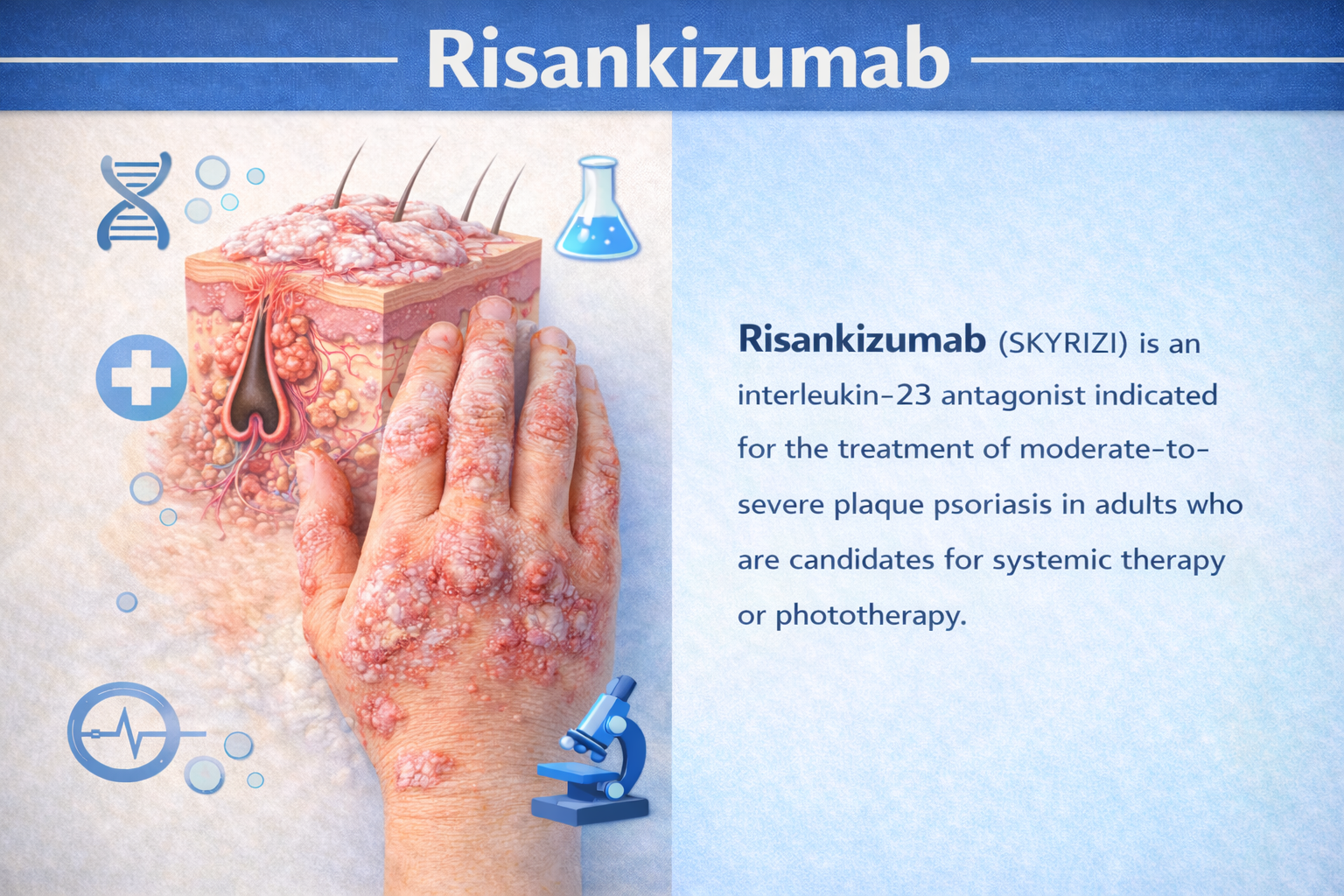
Humanized IgG1 monoclonal antibody that selectively binds the p19 subunit of IL-23, blocking its interaction with the IL-23 receptor. Approved for moderate-to-severe plaque psoriasis in adults who are candidates for systemic therapy or phototherapy.
BLA Number 761105Orig1s000
FDA Approval April 23, 2019
Drug Class IL-23p19 Antagonist (IgG1 mAb)
Route Subcutaneous injection
Approved Dose 150 mg SC Q0W, Q4W, then Q12W
Sponsor AbbVie Inc.
§1

Drug Overview

Indication
Moderate-to-Severe Plaque Psoriasis
Adults; candidates for systemic therapy or phototherapy
Pharmacologic Class
IL-23p19 Antagonist
Humanized IgG1 monoclonal antibody
Pivotal Trials
4
UltIMMa-1, UltIMMa-2, IMMhance, IMMvent
Total Subjects Exposed
2,234
Phase 2/3 psoriasis program (all doses)
Mechanism of Action — Risankizumab selectively binds the p19 subunit of human IL-23, blocking its interaction with the IL-23 receptor. This selectivity for p19 (vs. IL-12/23p40 shared by ustekinumab) preserves IL-12–mediated immunity. Downstream inhibition of IL-23 signalling suppresses Th17/Th22-driven inflammatory cascades implicated in plaque psoriasis pathogenesis, including IL-17A, IL-17F, and IL-22 production.
§1.1

Clinical Development Program

StudyDesignComparatorN (RZB)DurationKey Purpose
UltIMMa-1 (M16-008 / NCT02684370)Ph3, RCT, DB, PBO + active-controlledPlacebo, ustekinumab30452 weeksCo-primary efficacy; maintenance
UltIMMa-2 (M15-995 / NCT02684357)Ph3, RCT, DB, PBO + active-controlledPlacebo, ustekinumab29452 weeksCo-primary efficacy; maintenance
IMMhance (M15-992 / NCT02672852)Ph3, RCT, DB; randomised withdrawal designPlacebo40752+ weeksMaintenance & durability; re-treatment
IMMvent (M16-010 / NCT02694523)Ph3, RCT, DB; adalimumab switcher designAdalimumab30144 weeksHead-to-head vs. TNFi; rescue switching
Phase 2 dose-ranging (1311.2)Ph2, RCT, DB, dose-rangingUstekinumab24+ weeksDose selection (18 / 90 / 180 mg)

RZB = risankizumab 150 mg SC; DB = double-blind; RCT = randomised controlled trial. Ustekinumab used in trials was EU-sourced; FDA noted the applicant did not provide a scientific bridge to US-licensed Stelara. Source: FDA Medical Review BLA 761105 (Ref ID: 4422774).

§2

Baseline Characteristics

Enrollment criteria (all pivotal trials): Adults ≥18 years; moderate-to-severe chronic plaque psoriasis ≥6 months; BSA ≥10%; PASI ≥12; sPGA ≥3 (“moderate”); candidates for systemic therapy or phototherapy. Active TB, HIV, and viral hepatitis excluded; latent TB required prophylaxis prior to enrolment.
§2.1

UltIMMa-1 & UltIMMa-2 — Demographics

CharacteristicUltIMMa-2 · RZB (N=294)UltIMMa-2 · PBO (N=98)UltIMMa-2 · UST (N=99)UltIMMa-1 · RZB (N=304)UltIMMa-1 · PBO (N=102)UltIMMa-1 · UST (N=100)
Male203 (69%)67 (68%)66 (67%)212 (70%)79 (77%)70 (70%)
Mean Age (years)46.246.348.648.349.346.5
Age ≥65 years28 (10%)12 (12%)17 (17%)36 (12%)16 (16%)12 (12%)
White255 (87%)87 (89%)91 (92%)200 (66%)71 (70%)74 (74%)
Asian25 (9%)7 (7%)4 (4%)86 (29%)28 (27%)22 (22%)
Body weight ≤100 kg203 (69%)67 (68%)69 (70%)226 (74%)76 (75%)74 (74%)
Prior TNF use67 (23%)26 (27%)24 (24%)67 (22%)22 (22%)19 (19%)

UltIMMa-1 enrolled more Asian subjects than UltIMMa-2 owing to multi-country site distribution. Source: FDA Medical Review BLA 761105 (Ref ID: 4422774), Table 9.

§2.2

Baseline Disease Severity (UltIMMa-1 & UltIMMa-2)

ParameterUltIMMa-2 · RZBUltIMMa-2 · PBOUltIMMa-1 · RZBUltIMMa-1 · PBO
sPGA Moderate (3)228 (78%)77 (79%)256 (84%)86 (84%)
sPGA Severe (4)66 (22%)21 (21%)48 (16%)16 (16%)
Mean PASI (SD)20.54 (7.83)18.86 (7.31)20.63 (7.68)20.50 (6.68)
Median PASI18.516.418.118.9
Mean BSA% (SD)26.2 (15.9)23.9 (15.7)26.2 (15.4)27.9 (17.2)
Mean PSS (SD)8.27 (3.89)8.71 (3.46)7.99 (3.64)7.55 (3.37)

PASI = Psoriasis Area and Severity Index; BSA = body surface area; PSS = Psoriasis Symptom Scale (0–16). Source: FDA Medical Review BLA 761105 (Ref ID: 4422774), Table 10.

§2.3

IMMvent & IMMhance — Baseline Disease Severity

ParameterIMMvent · RZB (N=301)IMMvent · ADA (N=304)IMMhance · RZB (N=407)IMMhance · PBO (N=100)
sPGA Moderate (3)243 (81%)246 (81%)323 (79%)77 (77%)
sPGA Severe (4)58 (19%)58 (19%)84 (21%)23 (23%)
Mean PASI (SD)19.95 (7.46)19.72 (7.51)19.91 (7.94)21.17 (8.68)
Median BSA%21201923
Prior TNF use44 (15%)45 (15%)150 (37%)35 (35%)

IMMhance had a higher proportion of TNF-experienced subjects (~37%) compared to UltIMMa and IMMvent trials (~15–23%). Source: FDA Medical Review BLA 761105 (Ref ID: 4422774), Tables 19–20.

§3

Efficacy Results

Co-primary endpoints (UltIMMa-1 & UltIMMa-2): (1) Proportion achieving sPGA 0 or 1 (“clear” or “almost clear”) at Week 16 vs. placebo; (2) Proportion achieving PASI 90 (≥90% reduction from baseline PASI) at Week 16 vs. placebo. Both assessed by NRI in ITT population. Risankizumab was statistically superior to placebo on both co-primary endpoints in both trials (all p < 0.001).
ULTIMMA-1 (M16-008) — Week 16 Co-Primary Endpoints N: RZB 304 · UST 100 · PBO 102 | NRI, ITT

sPGA 0 or 1 (“clear or almost clear”)

Risankizumab 150 mg (N=304)
88%
Ustekinumab (N=100)
63%
Placebo (N=102)
8%

PASI 90

Risankizumab 150 mg (N=304)
75%
Ustekinumab (N=100)
42%
Placebo (N=102)
5%

All risankizumab vs. placebo p < 0.001. Source: FDA PI BLA 761105 (Ref ID: 4423209), Table 2; FDA Medical Review (Ref ID: 4422774), Table 11.

ULTIMMA-2 (M15-995) — Week 16 Co-Primary Endpoints N: RZB 294 · UST 99 · PBO 98 | NRI, ITT

sPGA 0 or 1 (“clear or almost clear”)

Risankizumab 150 mg (N=294)
84%
Ustekinumab (N=99)
62%
Placebo (N=98)
5%

PASI 90

Risankizumab 150 mg (N=294)
75%
Ustekinumab (N=99)
47%
Placebo (N=98)
2%

All risankizumab vs. placebo p < 0.001. Source: FDA PI BLA 761105 (Ref ID: 4423209), Table 2; FDA Medical Review (Ref ID: 4422774), Table 12.

§3.2

Secondary Endpoints — Week 16 (UltIMMa-1 & UltIMMa-2)

EndpointUltIMMa-2 RZB (N=294)UltIMMa-2 PBO (N=98)UltIMMa-1 RZB (N=304)UltIMMa-1 PBO (N=102)
sPGA 0 (“clear”)150 (51%)3 (3%)112 (37%)2 (2%)
PASI 100149 (51%)2 (2%)109 (36%)0 (0%)
PSS 0 (“no symptoms”)92 (31%)0 (0%)89 (29%)2 (2%)
PASI 90 (vs. UST, N=99/100)220 (75%)47 (48%)229 (75%)42 (42%)
sPGA 0 or 1 (vs. UST, N=99/100)246 (84%)61 (62%)267 (88%)63 (63%)

All comparisons vs. placebo p < 0.001. Risankizumab was superior to ustekinumab for all ranked secondary endpoints (p < 0.001). PSS = Psoriasis Symptom Scale. Source: FDA Medical Review BLA 761105 (Ref ID: 4422774), Table 12.

§3.3

IMMvent (vs. Adalimumab) & IMMhance (vs. Placebo) — Week 16

IMMvent (M16-010) — Week 16 N: RZB 301 · ADA 304 | NRI, ITT
Risankizumab · sPGA 0 or 1 (N=301)
84%
Adalimumab · sPGA 0 or 1 (N=304)
60%
Risankizumab · PASI 90 (N=301)
72%
Adalimumab · PASI 90 (N=304)
47%

Risankizumab was statistically superior to adalimumab for both co-primary endpoints (p < 0.001). PASI 75 at Week 16: RZB 91% vs. ADA 72% (p < 0.001). PASI 100 at Week 16: RZB 40% vs. ADA 23% (p < 0.001). Source: FDA Medical Review BLA 761105 (Ref ID: 4422774), Tables 21–22.

IMMhance (M15-992) — Week 16 N: RZB 407 · PBO 100 | NRI, ITT
Risankizumab · sPGA 0 or 1 (N=407)
84%
Placebo · sPGA 0 or 1 (N=100)
7%
Risankizumab · PASI 90 (N=407)
73%
Placebo · PASI 90 (N=100)
2%
Risankizumab · PASI 100 (N=407)
47%
Placebo · PASI 100 (N=100)
1%

Source: FDA PI BLA 761105 (Ref ID: 4423209), Section 14; FDA Medical Review (Ref ID: 4422774), Table 23.

§3.4

Response Rate Time-Course — ULTIMMA-1 (PASI 90)

Source: FDA PI BLA 761105 (Ref ID: 4423209), Table 2 (Week 16 values); FDA Medical Review (Ref ID: 4422774). Week 52 values from PI Section 14. Intermediate timepoints reported at Weeks 0, 16, and 52 only; null used for unreported intermediate weeks (spanGaps: false).
§3.5

Maintenance & Durability of Response — Week 52

PASI 90 at Week 52
81–82%
UltIMMa-1/2; 88% retention among Wk 16 PASI 90 responders who continued RZB (398/450)
PASI 100 at Week 52
56–60%
UltIMMa-1/2; 80% retention among Wk 16 PASI 100 responders who continued RZB (206/258)
IMMhance — Withdrawal
87% vs. 61%
sPGA 0/1 at Wk 52: continuous RZB (97/111) vs. withdrawal arm (138/225)
sPGA 0 at Week 52
58–60%
UltIMMa-1: 58%; UltIMMa-2: 60%
§3.6

Patient-Reported Outcomes — Week 16

PRO InstrumentFindingTimepoint
PSS 0 (“no symptoms”)~29–31% RZB vs. 0–2% PBO achieved PSS 0 in UltIMMa-1/2 (p < 0.001). PSS included in FDA labelling as COA-confirmed fit-for-purpose instrument.Week 16
DLQI 0 or 1~66–67% RZB vs. ~4–8% PBO achieved DLQI 0/1 in UltIMMa-1/2. FDA declined to include DLQI in labelling due to content validity issues.Week 16
PSS domains (pain, redness, itching, burning)Significant improvements in all PSS domain scores in risankizumab vs. placebo in both UltIMMa trials.Week 16

Source: FDA PI BLA 761105 (Ref ID: 4423209), Section 14; FDA Medical Review BLA 761105 (Ref ID: 4422774).

§4

Safety & Adverse Drug Reactions

No Boxed Warning. SKYRIZI (risankizumab-rzaa) prescribing information does not include a Boxed Warning. Source: FDA PI BLA 761105 (Ref ID: 4423209).
Safety Population (Controlled)
1,306
Subjects on risankizumab 150 mg through 16-week controlled period
≥1 Year Exposure
1,208
Subjects with ≥1 year exposure to risankizumab in Phase 2/3 psoriasis program
Total Program Exposure
2,234
All subjects exposed to ≥1 dose of risankizumab (all doses)
Most Common ADR (≥1%)
URI 13.0%
Upper respiratory infections in 16-week controlled period (vs. 9.7% placebo)
§4.1

Warnings & Precautions

  • Infections [PI §5.1]: Risankizumab may increase the risk of infections. Infections occurred in 22.1% of RZB vs. 14.7% of placebo subjects through 16 weeks (90.8 vs. 56.5 events/100 PY). Do not initiate in patients with clinically important active infections. Monitor closely and withhold treatment until infection resolves. In chronic or recurrent infection, weigh risks and benefits.
  • Tuberculosis [PI §5.2]: Evaluate all patients for TB prior to initiating treatment. For latent TB without adequate prior treatment, consider anti-TB therapy before starting risankizumab. Do not administer to patients with active TB. Monitor for signs/symptoms during and after treatment.
  • Immunisations [PI §5.3]: Complete all age-appropriate immunisations according to current guidelines before initiating risankizumab. Avoid live vaccines during treatment. No data on response to live or inactivated vaccines.
§4.2

Adverse Drug Reactions ≥1% — 16-Week Controlled Period

Adverse Drug ReactionRisankizumab 150 mg (N=1306) n (%)Placebo (N=300) n (%)Notes
Upper respiratory infections170 (13.0%)29 (9.7%)Viral/bacterial URI, sinusitis, rhinitis, nasopharyngitis, pharyngitis, tonsillitis
Headache46 (3.5%)6 (2.0%)Includes tension, sinus, cervicogenic headache
Fatigue33 (2.5%)3 (1.0%)Includes fatigue and asthenia
Injection site reactions19 (1.5%)3 (1.0%)Bruising, erythema, pain, pruritus, swelling, warmth
Tinea infections14 (1.1%)1 (0.3%)Tinea pedis, cruris, corporis, versicolor, manuum
Folliculitis<1% (>0.1%)LowerReported at <1% but >0.1%, at higher rate than placebo
Urticaria<1% (>0.1%)LowerReported at <1% but >0.1%, at higher rate than placebo

Source: FDA PI BLA 761105 (Ref ID: 4423209), Table 1 (Section 6.1).

§4.3

Infections — Key Safety Signal

Infection risk (0–16 weeks): Infections occurred in 22.1% of risankizumab subjects (90.8 events/100 PY) vs. 14.7% of placebo subjects (56.5 events/100 PY). Serious infections in both groups ≤0.4%. No discontinuations due to infections at 16 weeks.
Serious infections (16 weeks) 5 subjects (0.4%) RZB vs. 1 subject (0.3%) PBO. Included cellulitis (2), herpes zoster, osteomyelitis, sepsis, perirectal abscess, and diverticulitis.
Serious infections (52 weeks) 8 subjects (1.3%) RZB. Additional events included pneumonia, sepsis, pyelonephritis. Rate 1.8 events/100 PY — comparable to active controls.
Fungal infections (16 weeks) 20 (1.5%) RZB vs. 1 (0.3%) placebo. Predominantly tinea. Mucocutaneous candida: 2 cases. No serious fungal infections or discontinuations.
Tuberculosis No active TB in any treatment arm through 52 weeks. Among 72 latent TB subjects treated concurrently with RZB + prophylaxis: none developed active TB (mean follow-up 61 weeks). 2 subjects on isoniazid discontinued due to liver injury.
Overall infection rate (52 weeks) 73.9 events/100 PY — consistent with the 16-week rate (90.8/100 PY). No new infection categories emerged over time.
Opportunistic infections (full program) Rate 0.3 events/100 PY. Cases: CMV reactivation, esophageal candidiasis (1 each), oral candidiasis (4). None serious or leading to discontinuation.
§4.4

Adverse Events of Special Interest

  • Malignancy: No statistically significant association between risankizumab and malignancy in the Phase 2/3 program. SAEs included BCC, SCC, breast cancer (individual cases). 5 deaths in the full RZB group — 1 cancer-related (metastatic intestinal adenocarcinoma). PMR issued for long-term malignancy surveillance study.
  • MACE (Major Adverse Cardiovascular Events): No increased incidence of treatment-related MACE detected. 5 deaths (initial submission); 2 adjudicated cardiac (AMI, sudden cardiac death) — both subjects had extensive pre-existing cardiovascular risk factors.
  • Hepatic events: Serious hepatic events reported, most confounded by concomitant medications or comorbidities. Drug-induced liver injury led to study discontinuation in 1 subject. 2 subjects on isoniazid (latent TB prophylaxis) discontinued due to liver injury.
  • Suicidal ideation & behaviour (SIB): No increased incidence of treatment-related SIB observed in the clinical program. Ongoing post-marketing surveillance required.
  • Hypersensitivity / injection-site reactions: No serious cases of anaphylaxis or severe injection-site reactions. Higher rates of injection-site reactions in subjects with ADA titers ≥128. Urticaria and folliculitis reported at <1%.
§4.5

Serious Adverse Events & Discontinuations

ParameterRisankizumab 150 mgComparator
SAEs at 16 weeks31/1306 (2.4%)PBO: 12/300 (4.0%); UST: 12/199 (5.0%); ADA: 9/304 (3.0%)
SAEs at 52 weeks42/598 (7.0%)UST: 18/199 (9.0%)
SAEs (full program)139/2234 (6.2%) [9.8 events/100 PY]
Discontinuations due to AE (16 wks)9 (0.7%)PBO: 9 (3.0%)
Discontinuations due to AE (52 wks)5 (0.8%)
Deaths (initial submission)5 in risankizumab group; none attributed to drug2 in adalimumab group

SAE = serious adverse event. Source: FDA Medical Review BLA 761105 (Ref ID: 4422774), Section 7.3.4.

§4.6

Immunogenicity

Anti-drug antibodies (ADAs): By Week 52, approximately 24% (263/1079) of subjects developed antibodies to risankizumab-rzaa. Of those, approximately 57% (14% of all treated subjects) were neutralising. Higher ADA titers (~1% of subjects, titers ≥128) were associated with lower risankizumab concentrations and reduced clinical response. Source: FDA PI BLA 761105 (Ref ID: 4423209), Section 6.2.
§4.7

Special Populations Safety

PopulationData & Recommendation
PregnancyLimited human data; insufficient to evaluate risk of major birth defects, miscarriage, or adverse maternal/fetal outcomes. IgG1 crosses placenta; fetal exposure possible. Animal data: dose-dependent fetal/infant loss in cynomolgus monkeys (32% at 5 mg/kg [2× MRHD] vs. 19% vehicle; 43% at 50 mg/kg [20× MRHD]). No teratogenicity or neurobehavioural effects. PMR issued for pregnancy registry.
LactationNo data on presence of risankizumab-rzaa in human milk. Maternal IgG is present in human milk. Consider benefits of breastfeeding vs. risks.
Paediatric (<18 years)Safety and efficacy not established. PMR issued for PK/safety/efficacy study in subjects 6 to <18 years (PREA).
Geriatric (≥65 years)243 subjects ≥65 years and 24 subjects ≥75 years in Phase 3 program. No overall differences in exposure, safety, or efficacy. Insufficient data to determine if elderly respond differently.
Renal / Hepatic impairmentNo specific PK studies conducted. As a mAb, not expected to undergo significant renal elimination. No dose adjustment recommended.

Source: FDA PI BLA 761105 (Ref ID: 4423209), Sections 8.1–8.5; FDA Medical Review (Ref ID: 4422774).

§4.8

Nonclinical Safety Summary

Carcinogenicity & Mutagenicity Formal carcinogenicity and mutagenicity studies have not been conducted with risankizumab. FDA narrative risk assessment concludes low carcinogenic risk from long-term IL-23 inhibition based on published literature. Source: PI §13.1.
Reproductive Toxicity (cynomolgus monkey) Dose-dependent fetal/infant loss: 32% at 5 mg/kg (2× MRHD) vs. 19% vehicle; 43% at 50 mg/kg (20× MRHD). NOAEL for developmental toxicity: 5 mg/kg. No teratogenicity, malformations, or neurobehavioural effects in surviving infants.
Male Fertility (cynomolgus monkey) No effects on male fertility parameters (sperm, reproductive hormones, testicular histology) at 50 mg/kg/week × 26 weeks (20× MRHD). Source: PI §13.1.
Neonatal Serum Concentrations Infant monkey serum concentrations were approximately 17–86% of respective maternal concentrations. Concentrations detectable up to 91 days postpartum; below detection at 180 days. Source: PI §8.1.
§5

Pharmacology & Pharmacokinetics

Bioavailability (SC)
89%
Absolute bioavailability following subcutaneous injection
Tmax
3–14 days
Time to peak plasma concentration after SC dosing
Half-life (t½)
~28 days
Terminal elimination half-life in plaque psoriasis subjects
Volume of Distribution (Vss)
11.2 L
Estimated steady-state Vd (inter-subject CV 34%)
Systemic Clearance (CL)
0.31 L/day
Estimated systemic CL (inter-subject CV 24%)
Steady-State Cmax
~12 mcg/mL
Estimated peak concentration at 150 mg dose
Steady-State Ctrough
~2 mcg/mL
Estimated trough concentration at 150 mg Q12W
Steady-State Achieved
Week 16
Following SC dosing at Weeks 0, 4, and Q12W thereafter
Dose Proportionality
Linear
Dose-proportional PK from 18–300 mg (SC) and 90–180 mg (SC)

Source: FDA PI BLA 761105 (Ref ID: 4423209), Section 12.3.

§5.1

Mechanism of Action

Risankizumab-rzaa is a humanized IgG1 monoclonal antibody with Fc mutations (Leu234Ala, Leu235Ala) to minimise effector function. It selectively binds the p19 subunit of IL-23, blocking its interaction with the IL-23 receptor. IL-23 is a naturally occurring cytokine involved in inflammatory and immune responses. This selectivity for p19 (vs. IL-12/23p40 targeted by ustekinumab) preserves IL-12–mediated host defence (NK cells, Th1 responses) while suppressing the IL-23/Th17/IL-17 axis responsible for psoriatic plaques. Downstream, risankizumab inhibits the release of pro-inflammatory cytokines and chemokines. Source: FDA PI BLA 761105 (Ref ID: 4423209), Section 12.1.
§5.2

Absorption, Distribution, Metabolism & Elimination

ParameterDetail
Route / FormSubcutaneous injection; two 75 mg/0.83 mL prefilled syringes per 150 mg dose
Bioavailability89% absolute bioavailability after SC injection
Tmax3–14 days post-SC injection
Distribution (Vss)11.2 L (CV 34%); consistent with restricted vascular/interstitial distribution typical of IgG1 mAbs
ParameterDetail
MetabolismNot formally characterised; expected catabolism to small peptides and amino acids via catabolic pathways similar to endogenous IgG
Clearance / t½CL 0.31 L/day (CV 24%); terminal t½ ~28 days
Steady stateAchieved by Week 16 following dosing at Weeks 0, 4, Q12W
Body weight effectBW increases CL and Vd, decreasing plasma concentrations; response rates 3–7% lower in subjects >100 kg but no dose adjustment recommended
§5.3

Special Population Pharmacokinetics

PopulationPK Effect / Recommendation
Age (≥18 years)No clinically significant differences in PK based on age. No dose adjustment.
SexNo clinically significant PK differences reported. No dose adjustment.
Body weightCL and Vd increase with body weight; plasma concentrations decrease. No dose adjustment recommended.
Renal impairmentNo specific studies conducted. mAb catabolism not expected to undergo significant renal elimination.
Hepatic impairmentNo specific studies conducted.
Paediatric (<18 years)Not studied. PMR issued for PK study in ages 6 to <18 years.

Source: FDA PI BLA 761105 (Ref ID: 4423209), Section 12.3.

§5.4

Drug–Drug Interactions

CYP enzyme DDI (Study M16-007): Risankizumab 150 mg SC administered at Weeks 0, 4, 8, and 12 had no clinically meaningful effect on PK of CYP probe substrates: caffeine (CYP1A2), warfarin (CYP2C9), omeprazole (CYP2C19), metoprolol (CYP2D6), or midazolam (CYP3A). All 90% CI ratios within 0.8–1.25 (no-effect boundaries). No dose adjustments required for co-administered CYP substrates. Source: FDA PI BLA 761105 (Ref ID: 4423209), Section 12.3.
Live vaccines: Avoid use of live vaccines in patients receiving risankizumab. No data available on response to live or inactivated vaccines during treatment. Source: FDA PI BLA 761105 (Ref ID: 4423209), Section 7.1.
§5.5

Pharmacodynamics

Note: No formal pharmacodynamics studies have been conducted with risankizumab-rzaa per the approved prescribing information. Plasma concentrations increased dose-proportionally. Steady-state concentrations were achieved by Week 16 following the loading regimen (Weeks 0 and 4), with estimated steady-state Cmax ~12 mcg/mL and Ctrough ~2 mcg/mL. Source: FDA PI BLA 761105 (Ref ID: 4423209), Section 12.2.
§5.6

Nonclinical Pharmacology

Study / ParameterFindings
Binding affinity (human IL-23p19)Kd <1 pM; no binding to human IL-12 at 1 µM; no binding to rat IL-23; Kd 15 nM for mouse IL-23
STAT3 inhibition (DB cell line)IC50 24 pM for IL-23-induced STAT3 phosphorylation; 13–36 pM range across assays
IL-17 inhibition (mouse splenocytes)IC50 6.7 pM against human IL-23; does not inhibit IFN-γ induction by IL-12 (selectivity for p19 vs. p40)
Molecular featuresFc mutations (Leu234Ala, Leu235Ala) to minimise effector function; single N-linked glycosylation at Asn-297 (CH2 domain)

Source: FDA Medical Review BLA 761105 (Ref ID: 4422774), Pharmacology/Toxicology section.

§6

Dosing & Contraindications

Approved Dose
150 mg SC
Two 75 mg injections per dose
Route
Subcutaneous
Self-injection after training; HCP/caregiver for upper outer arm
Frequency
Q0W, Q4W, Q12W
Week 0, Week 4, then every 12 weeks thereafter
Duration
Ongoing
No defined treatment discontinuation; maintenance benefit demonstrated through Week 52

Standard Dosing Regimen

  • 150 mg SC (two 75 mg injections) at Week 0, Week 4, then every 12 weeks (Q12W)
  • Each 75 mg delivered as 0.83 mL via single-dose prefilled syringe (29G × ½ inch)
  • Administer two injections at different anatomic sites per dose (at least 1 inch apart)
  • No loading dose beyond the Week 0 and Week 4 injections

Dose Modifications

  • No dose adjustment for age (≥18 years), sex, or body weight
  • No dose adjustment for renal or hepatic impairment (no specific studies)
  • Paediatric (under 18 years): safety and efficacy not established — do not use
  • Geriatric (≥65 years): no overall differences in safety or efficacy; limited data in ≥75 years

Preparation & Administration

  • Allow carton to reach room temperature for 15–30 minutes out of direct sunlight before injecting (do not remove syringes from carton during warming)
  • Do not warm by microwave or hot water
  • Inspect visually: colourless to slightly yellow, clear to slightly opalescent; few translucent/white particles acceptable. Do not use if cloudy, discoloured, or large particles present
  • Inject at thighs or abdomen (≥2 inches from navel); upper outer arm by HCP/caregiver only
  • Do not inject into skin that is tender, bruised, erythematous, indurated, or affected by psoriasis
  • Train patients for first self-injection under HCP supervision

Missed Dose

  • If a dose is missed, administer as soon as possible
  • Thereafter, resume dosing at the regular scheduled time
  • Do not administer two doses simultaneously to make up for a missed dose
  • Contact healthcare provider if unsure
§6.1

Contraindications

None. The approved prescribing information states “None” under Section 4 (Contraindications). Note: Active tuberculosis is an exclusion criterion — risankizumab should not be administered to patients with active TB per labelled warnings, but this is a precaution rather than a formal contraindication. Source: FDA PI BLA 761105 (Ref ID: 4423209), Section 4.
§6.2

Warnings & Precautions Relevant to Dosing

  • TB screening before initiation [PI §5.2]: Evaluate patients for tuberculosis (TB) infection prior to initiating treatment with risankizumab. TST or IGRA testing required. For patients with latent TB who did not receive adequate prior treatment, consider anti-TB therapy before starting risankizumab.
  • Active infection — withhold dosing [PI §5.1]: Do not administer risankizumab in patients with any clinically important active infection until the infection resolves or is adequately treated.
  • Immunisations before initiation [PI §5.3]: Consider completion of all age-appropriate immunisations according to current guidelines prior to starting risankizumab. Live vaccines must be avoided during treatment.
§6.3

Administration Instructions

ParameterRecommendation
Injection techniqueSubcutaneous; 45-degree angle insertion; gently pinch cleaned skin; push plunger rod fully; needle guard activates only when full dose delivered
Needle gauge / length29 gauge × ½ inch; fixed needle with needle guard in 1 mL glass syringe
Injection site rotationEach of 2 injections per dose must be at a different site (≥1 inch apart). Rotate across thighs, abdomen, or (HCP only) upper outer arm across doses
Restricted sitesDo not inject into areas that are tender, bruised, erythematous, indurated, scarred, or affected by psoriasis
Storage after openingSingle-dose prefilled syringe — discard immediately after use; do not reuse. Dispose in FDA-cleared sharps container.
Formulation / storageRefrigerate at 2°C–8°C (36°F–46°F); do not freeze; do not shake; keep in original carton to protect from light; not made with natural rubber latex
§6.4

Use in Specific Populations

PopulationRecommendation & Data
PregnancyLimited human data; insufficient to evaluate risk. IgG1 crosses placenta — fetal exposure possible. Animal data: dose-dependent fetal/infant loss (see §4.7). PMR issued for pregnancy registry. Not recommended unless clinical benefit outweighs risk.
LactationNo data on presence in human milk. Maternal IgG1 is present in human milk. Consider benefits of breastfeeding vs. risk to infant.
Paediatric (<18 years)Safety and efficacy not established. Do not use.
Geriatric (≥65 years)No overall differences in exposure, safety, or efficacy vs. younger subjects. Use standard dosing.
Renal / Hepatic impairmentNo specific studies. No dose adjustment recommended based on available data.

Source: FDA PI BLA 761105 (Ref ID: 4423209), Sections 2.1, 2.2, 2.3, 4, 5.1–5.3, 8.1–8.5.

§7

Regulatory History

§7.1

NDA/BLA Key Facts

ItemDetail
Application TypeBLA 351(a) — Biologics License Application (original)
BLA Number761105Orig1s000
ApplicantAbbVie Inc., North Chicago, IL 60064
Submission DateApril 23, 2018
PDUFA Goal DateApril 23, 2019
Actual Approval DateApril 23, 2019
Review DivisionODE 3 / Division of Dermatology and Dental Products (DDDP)
Review TypeStandard Review
Breakthrough Therapy DesignationNot reported
Fast Track DesignationNot reported
Orphan Drug DesignationNot applicable (plaque psoriasis)
Advisory CommitteeNot convened
REMS RequiredNo
Medical Review Ref ID4422774
PI Ref ID4423209
§7.2

Regulatory Timeline

2015
Phase 2 Dose-Ranging Initiated
Study 1311.2 — Ph2 RCT with ustekinumab comparator; dose selection for Phase 3 (18, 90, 180 mg)
2016
Phase 3 Program Initiated
UltIMMa-1 (NCT02684370), UltIMMa-2 (NCT02684357), IMMhance (NCT02672852), IMMvent (NCT02694523) all registered/initiated
APRIL 23, 2018
BLA Submission
BLA 761105 submitted to FDA/CDER by AbbVie Inc. Standard review designation
APRIL 23, 2018
BLA Receipt & Filing
Received by FDA CDER; ODE 3 / Division of Dermatology & Dental Products (DDDP) assigned as reviewing division
APRIL 23, 2019
PDUFA Goal Date
Target action date under 12-month standard review clock
APRIL 17, 2019
Multi-Discipline Review Completed
FDA multi-discipline review and evaluation signed; signatory: Kendall A. Marcus, MD
APRIL 23, 2019
FDA Approval — SKYRIZI™ (risankizumab-rzaa)
Approved indication: Treatment of moderate-to-severe plaque psoriasis in adults who are candidates for systemic therapy or phototherapy. Standard review; no REMS; initial US approval.
§7.3

Key Review Issues

Ustekinumab Comparator — Scientific Bridge Pivotal trials (UltIMMa-1/2, Phase 2) used EU-sourced ustekinumab. FDA identified that the applicant did not provide a scientific bridge between EU-sourced ustekinumab and US-licensed Stelara. Resolved: comparative efficacy/safety claims vs. ustekinumab were limited in the label; only descriptive results included.
PSS as Patient-Reported Outcome Instrument The Psoriasis Symptom Scale (PSS) was submitted as a patient-reported outcome. FDA COA reviewers confirmed PSS as fit-for-purpose for assessment of signs and symptoms. PSS results included in labelling (Section 14). DLQI not included due to item relevancy and content validity issues.
Immunogenicity Characterisation ADA incidence was substantial (~24% by Week 52). FDA required a statement that higher ADA titers (~1%) were associated with lower drug concentrations and reduced clinical response. Immunogenicity section added to PI §6.2 with appropriate language.
IMMhance Withdrawal Design — Descriptive Labelling IMMhance used a randomised withdrawal design at Week 28. FDA determined that re-randomised withdrawal data should be presented as descriptive (not hypothesis-testing) results per guidance. Maintenance and durability data included in PI Section 14 with appropriate framing.
Malignancy Signal Assessment FDA assessed whether the modest numerical imbalance in malignancy events (particularly NMSC) was drug-related. Conclusion: no statistically significant association; however, a post-marketing requirement (PMR 3) for a long-term observational safety study including malignancy as primary endpoint was imposed.
Paediatric Requirement (PREA) Plaque psoriasis occurs in the paediatric population, triggering PREA. AbbVie agreed to conduct a paediatric study (PK/safety/efficacy) in children 6 to <18 years with moderate-to-severe plaque psoriasis as PMR 4.
§7.4

Post-Marketing Requirements & Commitments

4 PMRs issued at time of approval. No REMS required. Long-term safety surveillance and paediatric data generation are primary requirements.
PMR / PMCStudy TypeObjectiveKey Design Elements
PMR 1 — Pregnancy Registry (Prospective)Registry-based observational cohortCapture maternal, fetal, and infant outcomes in pregnant women exposed to risankizumabMajor/minor congenital malformations, spontaneous abortions, stillbirths, neonatal infections; follow through ≥1 year of infant life
PMR 2 — Pregnancy Registry (Retrospective)Retrospective cohort or case-control (claims/EMR)Assess congenital malformations, SAB, stillbirths in risankizumab-exposed pregnanciesAdministrative claims or electronic medical record data; comparison to unexposed or disease-matched controls
PMR 3 — Long-term Safety / MalignancyObservational cohort studyLong-term safety vs. other psoriasis therapies; primary outcome: malignancySecondary outcomes: serious infections, TB, OI, CV events, autoimmune, neurologic, GI/haematologic AEs; 4-year enrolment; ≥8-year follow-up
PMR 4 — Paediatric PK/Safety/Efficacy (PREA)Interventional PK/safety/efficacy studyEvaluate PK, safety, and efficacy in children 6 to <18 years with moderate-to-severe plaque psoriasisMinimum 1 year of risankizumab exposure; dose selection based on PK modelling
§7.5

Regulatory Notes

DomainNote
Benefit-risk conclusionFDA concluded the benefit-risk profile of risankizumab is favourable for the approved indication. Robust and consistent efficacy data across 4 Phase 3 trials; acceptable safety profile with manageable infection risk.
Labelling — PSS includedPSS (Psoriasis Symptom Scale) included in Section 14 as FDA COA-confirmed fit-for-purpose instrument. DLQI excluded due to content validity issues.
Labelling — Ustekinumab comparatorNo head-to-head claim vs. ustekinumab in indication text. Comparative data presented descriptively only due to absence of scientific bridge between EU and US ustekinumab.
Immunogenicity labellingADA incidence (24% by Wk 52; 57% neutralising) and impact of high titers on PK/response included in PI §6.2 per FDA biologic labelling standards.
PharmacovigilanceNo REMS required. Standard pharmacovigilance through routine adverse event reporting (MedWatch). Long-term observational safety study (PMR 3) mandated.
Source documentsFDA PI: BLA 761105 (Ref ID: 4423209, April 2019). FDA Multi-Discipline Review: BLA 761105 (Ref ID: 4422774, April 2019).
Key labelling decisions: (1) PSS included in labelling as COA-confirmed fit-for-purpose instrument for signs and symptoms. (2) DLQI results not included due to item relevancy and content validity issues. (3) Ustekinumab comparator data presented descriptively; no head-to-head superiority claim due to absence of scientific bridge between EU-sourced and US-licensed ustekinumab. (4) Randomised withdrawal data from IMMhance included as descriptive results per FDA guidance.
Source documents: FDA Prescribing Information, SKYRIZI (risankizumab-rzaa) injection (BLA 761105, Ref ID: 4423209, April 2019); FDA Multi-Discipline Review and Evaluation, BLA 761105 (Ref ID: 4422774, April 2019). This profile is for educational/clinical research reference. Clinicians should consult current FDA-approved prescribing information at www.fda.gov/drugsatfda. TrialistMD.com — trialist.md

Leave a Reply

Your email address will not be published. Required fields are marked *