Deuruxolitinib (LEQSELVI) — Drug Profile | TrialistMD
TRIALISTMD.COMDRUG PROFILE
JAK Inhibitor · Small Molecule · Dermatology
Deuruxolitinib
LEQSELVI™ · Sun Pharmaceutical Industries, Inc.
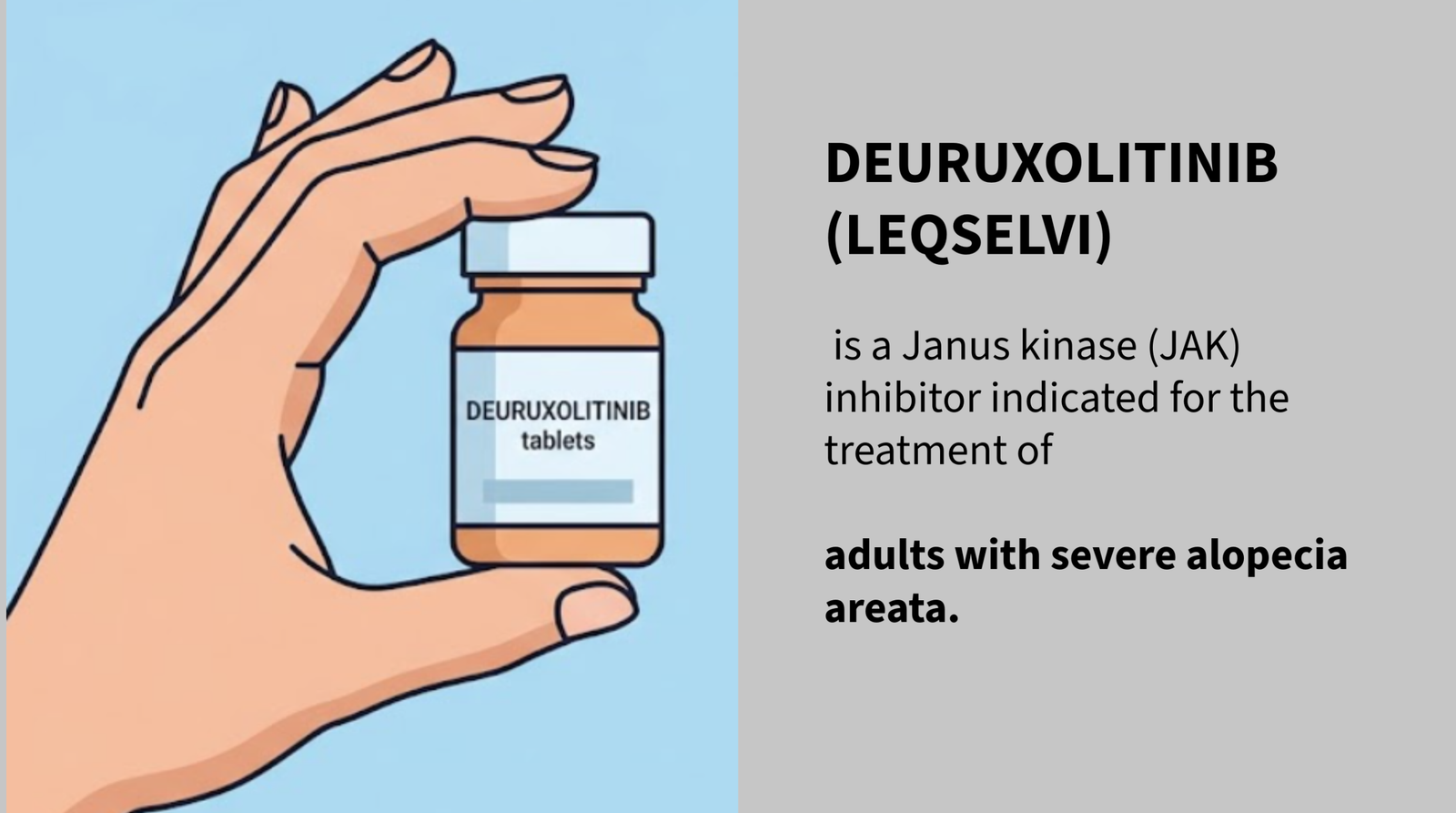
A selective, orally bioavailable Janus kinase (JAK1/JAK2/TYK2) inhibitor and the first deuterated JAK inhibitor approved by the FDA. Indicated for the treatment of adult patients with severe alopecia areata, based on two pivotal Phase 3 trials (THRIVE-AA1 and THRIVE-AA2).
NDA Number217900
FDA ApprovalJuly 2024
Application TypeNDA 505(b)(1) · Standard
Approved Dose8 mg BID (oral)
Pharmacologic ClassJAK Inhibitor
ApplicantSun Pharmaceutical Industries, Inc.
FDA Boxed Warning — LEQSELVI (deuruxolitinib)
Serious Infections: Increased risk of serious bacterial, fungal, viral and opportunistic infections including tuberculosis (TB), that may lead to hospitalization or death. Interrupt treatment if a serious infection occurs. Test for latent TB before and during therapy; treat latent TB prior to use.
Mortality: Higher rate of all-cause mortality, including sudden cardiovascular death, with another JAK inhibitor vs. TNF blockers in RA patients. LEQSELVI is not approved for use in RA patients.
Malignancy: Higher rate of lymphomas and lung cancers with another JAK inhibitor vs. TNF blockers in RA patients.
MACE: Higher rate of cardiovascular death, MI, and stroke with another JAK inhibitor vs. TNF blockers in RA patients.
Thrombosis: DVT, PE, and cerebral venous sinus thrombosis reported in patients treated with LEQSELVI. Increased incidence of thrombosis with another JAK inhibitor vs. TNF blockers.
Overview
§1
Indication
Severe Alopecia Areata
Adults with ≥50% scalp hair loss (SALT ≥50)
Mechanism
JAK1/JAK2/TYK2 Inhibitor
Deuterated analog of ruxolitinib (CTP-543)
Dose & Schedule
8 mg BID
Oral, with or without food
Phase 3 Program
2 Pivotal Trials
THRIVE-AA1 + THRIVE-AA2 · N=1,209 (pivotal)
Mechanism of Action: Deuruxolitinib is a Janus kinase (JAK) inhibitor. JAKs mediate signaling from cytokines and growth factors via recruitment of STATs to cytokine receptors, with subsequent modulation of gene expression involved in immune function and hematopoiesis. In cell-free in vitro kinase assays, deuruxolitinib demonstrated greater inhibitory potency for JAK1, JAK2, and TYK2 relative to JAK3. In alopecia areata, autoimmune destruction of anagen hair follicles is mediated through JAK-STAT signaling; deuruxolitinib inhibits this pathway to restore hair follicle immune privilege. The relevance of inhibition of specific JAK enzymes to therapeutic effectiveness is not currently known.
Deuterium rationale & CYP2C9 sensitivity: Deuruxolitinib is a carbon-deuterium (C–D) substituted analog of ruxolitinib. Deuterium substitution at the cyclopentyl ring slows CYP2C9-mediated metabolism. As deuruxolitinib is primarily metabolized by CYP2C9 (76%), it is uniquely sensitive to CYP2C9 genetic variants and CYP2C9 inhibitors — resulting in the only contraindications for this drug.
Clinical Trial Programme
§1.2
Trial Name
NCT Number
Design
N Randomised
Duration
Comparator
Primary Endpoint
CP543.2001 (Phase 2 Dose-Ranging)
Not reported
R, DB, PC
Not reported (Phase 2)
24 weeks
Placebo
SALT response; dose-ranging
THRIVE-AA1 (CP543.3001)
NCT04518995
R, DB, PC, Multicentre
706
24 weeks + OLE
Placebo
SALT ≤20 at Week 24
THRIVE-AA2 (CP543.3002)
NCT04797650
R, DB, PC, Multicentre
503
24 weeks + OLE
Placebo
SALT ≤20 at Week 24
Long-Term Extension Trial 1
Not reported
Open-label extension
868 (8 mg) at 52 wk
52 weeks (up to 3 yr)
None
Safety, durability
Long-Term Extension Trial 2
Not reported
Open-label extension
829 (8 mg) at 3 yr
Up to 3 years
None
Safety, durability
Abbreviations: R = randomised; DB = double-blind; PC = placebo-controlled; OLE = open-label extension; SALT = Severity of Alopecia Tool score. Source: FDA Prescribing Information NDA 217900 (Ref ID: 5418989), §14 Clinical Studies; FDA Medical Review NDA 217900 (Ref ID: 5418639).
Competitive Landscape — Approved JAK Inhibitors for Alopecia Areata
§1.3
Drug (INN · Brand)
Target
US Approval Date
Dose
Approved Population
Baricitinib (OLUMIANT)
JAK1/JAK2
June 13, 2022
2 mg or 4 mg QD
Adults with severe AA
Ritlecitinib (LITFULO)
JAK3 / TEC family
June 23, 2023
50 mg QD
Adults & adolescents ≥12 yr
Deuruxolitinib (LEQSELVI) ◀
JAK1/JAK2/TYK2
July 2024
8 mg BID
Adults with severe AA
Baricitinib and ritlecitinib approval dates per FDA records cited in FDA Medical Review NDA 217900 (Ref ID: 5418639).
Key Drug Information
§1.4
Parameter
Detail
Proprietary Name
LEQSELVI™ (conditionally acceptable — DMEPA review October 24, 2023)
INN / Generic Name
Deuruxolitinib
Code Name
CTP-543
Manufacturer
Halo Pharmaceutical, Inc., Whippany, NJ 07981, USA
Source: FDA Prescribing Information NDA 217900 (Ref ID: 5418989), §§3, 11, 16.
Baseline Characteristics
§2
Trial population summary: Baseline characteristics are reported for the two pivotal placebo-controlled trials — THRIVE-AA1 (NCT04518995, N=706) and THRIVE-AA2 (NCT04797650, N=503) — together with the pooled dataset (N=1,209). Subjects enrolled in both trials had severe alopecia areata with SALT ≥50 for more than 6 months. The trial population ranged from 18 to 65 years of age. The mean pooled baseline SALT score across treatment groups ranged from 85.9 to 88.6, with a mean duration of current episode of hair loss of 3.7 to 3.9 years. Demographics and disease characteristics were generally balanced across treatment arms.
Pooled THRIVE-AA1 + THRIVE-AA2 (N=1,209)
§2.1
Parameter
Deuruxolitinib 8 mg BID (N=600)
Deuruxolitinib 12 mg BID (N=380)*
Placebo (N=267)
Age, mean (SD), years
Not reported (pooled)
—
—
Age range, years
18–65
18–65
18–65
Female sex, %
64%
64%
64%
Race: White, %
74%
74%
74%
Race: Black / African American, %
9%
9%
9%
Race: Asian, %
6%
6%
6%
Ethnicity: Hispanic or Latino, %
8%
8%
8%
Baseline SALT score, mean (range)
85.9–88.6 (pooled range)
85.9–88.6
85.9–88.6
Current episode duration, mean, years
3.7–3.9 (pooled range)
3.7–3.9
3.7–3.9
SALT 95–100% (near-total/total alopecia), %
~59%
~59%
~59%
Eyebrow hair involvement, %
~73%
~73%
~73%
Eyelash hair involvement, %
~70%
~70%
~70%
* Deuruxolitinib 12 mg BID is not approved; shown for contextual reference only. Proportions reported as approximate percentages from the pooled trial population. Source: FDA Prescribing Information NDA 217900 (Ref ID: 5418989), §14 Clinical Studies. Exact per-arm means (SD) for continuous variables not disaggregated by arm in the PI; values reflect the pooled population description. N for pooled 8 mg arm reflects Phase 3 controlled trial subjects per PI §6.1 (N=640 including both trials).
THRIVE-AA1 (NCT04518995)
§2.2
Parameter
Deuruxolitinib 8 mg BID (N=351)
Deuruxolitinib 12 mg BID (N=215)*
Placebo (N=140)
N enrolled
351
215
140
Primary endpoint responders (SALT ≤20 at Wk 24)
29%
Not reported in PI (12 mg)
1%
Baseline SALT score, mean range
85.9–88.6
85.9–88.6
85.9–88.6
SALT 50–94%, n
~included in 248 (pooled)
Not reported per arm
~included in 110 (pooled)
SALT 95–100%, n
~included in 352 (pooled)
Not reported per arm
~included in 157 (pooled)
THRIVE-AA2 (NCT04797650)
§2.3
Parameter
Deuruxolitinib 8 mg BID (N=249)
Deuruxolitinib 12 mg BID (N=165)*
Placebo (N=127)
N enrolled
249
165
127
Primary endpoint responders (SALT ≤20 at Wk 24)
32%
Not reported in PI (12 mg)
1%
Baseline SALT score, mean range
85.9–88.6
85.9–88.6
85.9–88.6
* Deuruxolitinib 12 mg BID is not approved. Per-arm N values for AA-1 and AA-2 sourced from PI §14, Table 3. Per-arm continuous baseline characteristics (age, weight, BMI as means ± SD) are not reported disaggregated by arm in the FDA Prescribing Information; granular demographic tables are available in the FDA Medical Review (Ref ID: 5418639). Source: FDA Prescribing Information NDA 217900 (Ref ID: 5418989), §§6.1 and 14.
Clinical Efficacy
§3
Primary endpoint & statistical framework: The co-primary endpoints in both THRIVE-AA1 and THRIVE-AA2 were (1) proportion of subjects achieving SALT ≤20 (≥80% scalp hair coverage) at Week 24 and (2) proportion achieving SALT ≤10 (≥90% scalp hair coverage) at Week 24. Statistical framework: non-responder imputation (NRI) for missing values. Family-wise error rate controlled using a hierarchical testing procedure. p-values are two-sided with significance threshold α=0.05.
Primary Endpoint
SALT ≤20 at Week 24
≥80% scalp hair coverage
Co-Primary Endpoint
SALT ≤10 at Week 24
≥90% scalp hair coverage
Total Pivotal N
1,209
AA-1: 706 · AA-2: 503
Baseline Eligibility
SALT ≥50
≥50% scalp hair loss >6 months
Primary Endpoint — SALT ≤20 at Week 24
§3.1
THRIVE-AA1 (NCT04518995) — SALT ≤20 at Week 24N: 8 mg n=351, 12 mg n=215*, Placebo n=140 · NRI imputation
SALT ≤10 (≥90% scalp hair coverage) at Week 24 — Both TrialsPooled results; NRI imputation
AA-1 · 8 mg BID (n=351)
20%
AA-1 · Placebo (n=140)
0%
AA-2 · 8 mg BID (n=249)
24%
AA-2 · Placebo (n=127)
0%
Risk difference AA-1: 21% (95% CI: 16%–25%) · Risk difference AA-2: 24% (95% CI: 19%–30%). Note: not adjusted for multiplicity.
Efficacy Response Over Time — SALT ≤20
§3.3
Source: Values digitized from FDA Medical Review NDA 217900 (Ref ID: 5418639), Figure 9 (THRIVE-AA1 and THRIVE-AA2, all arms) and Figure 10 (pooled 8 mg BID vs placebo). Reviewer analysis using dataset adsalt.xpt. * 12 mg not approved — shown for reference only.
Approximate values for weekly SALT ≤20 sub-analyses digitized from PI Figure 1 and Medical Review figures. SPRO = Satisfaction of Hair Patient-Reported Outcome. Source: PI §14 Tables 3–4 (Ref ID: 5418989); Medical Review NDA 217900 (Ref ID: 5418639).
Efficacy by Baseline Severity (Pooled AA-1 + AA-2)
§3.5
SALT ≤20 at Week 24 — Pooled by Baseline SeveritySource: PI §14 Table 5 (Ref ID: 5418989)
8 mg · SALT 50–94% (n=248)
46%
Placebo · SALT 50–94% (n=110)
2%
8 mg · SALT 95–100% (n=352)
20%
Placebo · SALT 95–100% (n=157)
0%
* Deuruxolitinib 12 mg BID is not approved. FDA placed the 12 mg dose on partial clinical hold (May 17, 2023) due to a dose-dependent venous thromboembolism signal in the open-label extension. All 12 mg data displayed for contextual reference only. Source: FDA Prescribing Information NDA 217900 (Ref ID: 5418989), §14; FDA Medical Review NDA 217900 (Ref ID: 5418639).
Safety & Adverse Drug Reactions
§4
Boxed Warning: LEQSELVI carries an FDA Boxed Warning for (1) Serious Infections including TB; (2) increased all-cause mortality including sudden cardiovascular death (class data, JAK inhibitor vs. TNF blockers in RA); (3) Malignancy and lymphoproliferative disorders; (4) Major Adverse Cardiovascular Events (MACE); and (5) Thrombosis including DVT, PE, and cerebral venous sinus thrombosis. See PI §§5.1–5.5 (Ref ID: 5418989).
Safety Population (8 mg, controlled)
640
Subjects, 24-week placebo-controlled trials
Long-term Exposure (8 mg)
829
Subjects in OLE up to 3 years
Total Exposure (all deuruxolitinib)
1,730
Subjects across all trials · 1,962.9 patient-years
Discontinuations Due to AEs (8 mg)
3.1%
20/640 subjects discontinued in controlled trials
Warnings & Precautions
§4.1
Serious Infections (§5.1): Avoid use in patients with active serious infection. Test for latent TB; treat prior to initiation. Monitor for herpes zoster reactivation; consider interrupting treatment. Screen for viral hepatitis (HBV, HCV) before treatment.
Mortality (§5.2): Higher rate of all-cause mortality including sudden cardiovascular death observed with another JAK inhibitor vs. TNF blockers in RA patients ≥50 years with ≥1 cardiovascular risk factor. Consider benefit-risk for individual patient.
Malignancy & Lymphoproliferative Disorders (§5.3): Malignancies observed in LEQSELVI clinical trials. Higher rates of lymphomas and lung cancers with another JAK inhibitor vs. TNF blockers in RA. Periodic skin examination recommended. Consider benefit-risk particularly in current or past smokers.
MACE (§5.4): Higher rate of cardiovascular death, MI, and stroke with another JAK inhibitor vs. TNF blockers in RA patients ≥50 years. Discontinue if MI or stroke occurs. Increased risk in current or past smokers.
Thrombosis (§5.5): DVT, PE, and CVT reported in clinical trials. Avoid in patients at increased risk of thrombosis. Discontinue if symptoms of thrombosis occur. No clear relationship between platelet count elevation and thrombotic events.
CYP2C9 Poor Metabolizers / CYP2C9 Inhibitors (§5.6): CONTRAINDICATED in CYP2C9 poor metabolizers and patients taking moderate or strong CYP2C9 inhibitors. Estimated 2-fold higher deuruxolitinib exposure in CYP2C9 PMs, increasing risk of serious adverse reactions including thrombosis. Test patients for CYP2C9 variants before initiating treatment.
Gastrointestinal Perforations (§5.7): Reported in clinical trials. Monitor patients at increased risk (history of diverticulitis). Evaluate promptly for new onset abdominal symptoms.
Lipid Elevations, Anemia, Neutropenia, Lymphopenia (§5.8): Perform CBC and lipid panel at baseline and periodically during treatment. Avoid/interrupt treatment per hematologic thresholds (see Dosing tab).
Immunizations (§5.9): Complete all immunizations including herpes zoster vaccination prior to treatment. Avoid live vaccines during or immediately prior to treatment.
Adverse Reactions ≥1% — 24-Week Placebo-Controlled Data
12 mg dose — VTE signal driving partial clinical hold: Between Week 52 and Week 98, four subjects on deuruxolitinib 12 mg BID developed venous thromboembolic events totaling 7 thrombotic events (0.2/100 PY), including DVT, bilateral PE, pulmonary embolism, and cerebral venous sinus thrombosis. This dose-dependent thrombosis signal led to FDA partial clinical hold (May 17, 2023) and the applicant’s withdrawal of the 12 mg dose from the NDA submission.
Special Populations Safety
§4.4
Population
Finding / Recommendation
Pregnancy
May cause fetal harm based on animal reproduction studies. Reduced fetal weight and skeletal malformation in rats at 4.8× MRHD; maternal toxicity and post-implantation loss in rabbits at 0.3× MRHD. Advise effective contraception. Pregnancy registry enrollment required (PMR).
Lactation
Not recommended — deuruxolitinib present in rat milk at levels up to 20× plasma. Avoid breastfeeding during treatment and for 1 day after last dose.
Pediatric
Safety and effectiveness not established. No data.
Geriatric (≥65 yr)
Only 2 subjects (0.3%) were ≥65 years in Phase 3 trials; insufficient data for subgroup conclusions.
Renal Impairment
Mild–moderate (eGFR 30–89 mL/min): no dose adjustment. Severe (eGFR <30 mL/min) / ESRD: not recommended (pharmacokinetics unknown).
Hepatic Impairment
Mild (Child-Pugh A) and moderate (Child-Pugh B): no dose adjustment. Severe (Child-Pugh C): not recommended (pharmacokinetics unknown).
CYP2C9 Poor Metabolizers
Contraindicated — estimated 2-fold higher deuruxolitinib exposure based on PBPK modeling; no direct PK data generated in CYP2C9 PM subjects during clinical program.
Nonclinical Safety
§4.5
Carcinogenicity
Not carcinogenic in 6-month rasH2 transgenic mouse study (doses up to 100 mg/kg/day). No drug-related tumors in 2-year rat carcinogenicity study up to 30 mg/kg/day (0.6× MRHD, AUC-based).
Genotoxicity
Positive in in vitro micronucleus assay. Negative in bacterial mutation assay (Ames), in vitro chromosome aberration assay, and in vivo rat micronucleus assay. Overall genotoxic risk considered low.
Reproductive Toxicity
No adverse effects on male or female fertility up to 100 mg/kg/day in rats. Adverse embryonic development (decreased viable embryos, post-implantation loss) at ≥30 mg/kg/day (0.9× MRHD). NOAEL for embryo-fetal toxicity: 10 mg/kg/day (0.2× MRHD). Fetal effects in rabbits at 60 mg/kg/day (0.3× MRHD).
Cardiac Safety (QTc)
At concentrations approximately 4-fold higher than Cmax at the 12 mg BID dose (highest evaluated clinically), deuruxolitinib does not prolong the QT interval to any clinically relevant extent. No QTc signal.
Source: FDA Prescribing Information NDA 217900 (Ref ID: 5418989), §§8.1, 8.4, 8.5, 8.6, 8.7, 12.2, 13.1.
Pharmacology & Pharmacokinetics
§5
Oral Bioavailability
90%
High; not affected by food
Tmax
~1.5 hr
Time to peak plasma concentration
Half-Life (t½)
~4 hr
Mean elimination half-life
Volume of Distribution
~50 L
Steady-state Vd
Protein Binding
91.5%
Plasma protein bound; blood:plasma ratio ~1.3
Steady State
1–2 days
Minimal accumulation with BID dosing
Absorption
§5.1
Food effect: No clinically significant differences in pharmacokinetics of deuruxolitinib were observed following administration with a high-fat, high-calorie meal (approximately 50% fat, 800–1000 calories). Deuruxolitinib may be taken with or without food. Dose proportionality confirmed over 8–48 mg range (6× the approved recommended dose) in healthy subjects.
Metabolism
§5.3
Parameter
Detail
Primary Metabolism
CYP2C9 (76%)
Secondary Metabolism
CYP3A4 (21%)
Minor Metabolism
CYP1A2 (3%)
Major Metabolites
C-21714 and C-21717 — each ~5% of total drug-related AUC; ~10-fold less pharmacologically active than deuruxolitinib
CYP Inhibition
Not an inhibitor of CYP1A2, CYP2B6, CYP2C8, CYP2C19, CYP2D6, or CYP3A4
CYP Induction
Not an inducer of CYP1A2, CYP2B6, CYP2C8, or CYP2C19
Elimination
§5.4
After a single dose of radiolabeled deuruxolitinib, no unchanged drug was recovered in either urine or feces. The primary route of elimination is hepatic metabolism. Transporter substrates: BCRP and MDR1 (efflux); not a substrate of OATP1B1 or OATP1B3. Transporter inhibition: inhibits BCRP, BSEP, OAT3, and MATE2-K; does not inhibit OATP1B1, OATP1B3, or OCT1.
Estimated up to 2-fold higher exposure (PBPK modeling); no direct PK data generated — CONTRAINDICATED
CYP2C9 intermediate metabolizers (*1/*3)
Not evaluated
Drug–Drug Interactions
§5.6
CYP2C9 inhibitors are contraindicated: Both moderate and strong CYP2C9 inhibitors are contraindicated in combination with deuruxolitinib due to predicted or observed substantial increases in deuruxolitinib exposure, raising the risk of serious adverse reactions including thrombosis.
CYP2C9 Poor Metabolizers: Based on drug-drug interaction modeling, CYP2C9 poor metabolizers (e.g., *2/*3, *3/*3 genotypes) may have up to 2-fold higher concentrations of deuruxolitinib compared to normal metabolizers. This estimated increase is predicted to raise the risk of serious adverse reactions including thrombosis. No direct pharmacokinetic data in CYP2C9 poor metabolizers were generated during the clinical program. LEQSELVI is contraindicated in CYP2C9 poor metabolizers. The pharmacokinetics of deuruxolitinib were not evaluated in intermediate metabolizers (*1/*3 genotype).
Population
CYP2C9 Poor Metabolizer Prevalence
White / European
~2–3%
Asian
~0.5–4%
Black / African American
<1% (but *5, *6, *8, *11 alleles — associated with decreased/nonfunctional CYP2C9 — more prevalent)
Mechanism of Action
§5.8
Deuruxolitinib is a Janus kinase (JAK) inhibitor. JAKs mediate intracellular signaling from interactions of cytokines and growth factors with their receptors, involving recruitment of STATs (signal transducers and activators of transcription) to cytokine receptors, activation, and subsequent localization of STATs to the nucleus leading to modulation of gene expression. In cell-free in vitro kinase activity assays, deuruxolitinib demonstrated greater inhibitory potency for JAK1, JAK2, and TYK2 relative to JAK3. The relevance of inhibition of specific JAK enzymes to therapeutic effectiveness is not currently known.
Pharmacodynamics
§5.9
Deuruxolitinib inhibited whole blood IL-6 stimulated pSTAT3 (phospho-STAT3) in healthy subjects at 2 hours post-dose, consistent with JAK1/JAK2 inhibition. The relevance of this pharmacodynamic finding in alopecia areata patients is unknown. At concentrations approximately 4-fold higher than the Cmax associated with the highest dose evaluated clinically (12 mg BID), deuruxolitinib does not prolong the QT interval to any clinically relevant extent.
Source: FDA Prescribing Information NDA 217900 (Ref ID: 5418989), §§12.1–12.5 and §7. Clinical pharmacology data from single-dose 12 mg administration (1.5× approved dose) used for DDI studies per PI §12.3.
Dosing & Contraindications
§6
Approved Dose
8 mg
Twice daily (BID)
Route
Oral
With or without food
Frequency
Twice Daily
~12 hours apart
Duration
Ongoing
No defined treatment duration in label
Standard Dosing
8 mg orally twice daily, with or without food
No loading dose
No dose escalation — only approved dose is 8 mg BID
Tablets should not be crushed; take whole with water
Dose Modifications — Organ Impairment
Mild–moderate renal impairment (eGFR 30–89 mL/min): No dose adjustment
Severe renal impairment (eGFR <30 mL/min) / ESRD: Not recommended
Mild–moderate hepatic impairment (Child-Pugh A/B): No dose adjustment
Severe hepatic impairment (Child-Pugh C): Not recommended
Paediatric: Not established
Missed Dose
If a dose is missed, skip the missed dose
Resume dosing at the next regularly scheduled time
Do not double up doses to compensate
Administration Notes
Oral tablet — no reconstitution required
Store in original bottle to protect from moisture
Store at 20°C–25°C (68°F–77°F)
Bottle contains 60 tablets (30-day supply at BID dosing)
Contraindications
§6.4
Contraindications (PI §4): LEQSELVI is contraindicated in patients who: (1) are CYP2C9 poor metabolizers; and (2) are on concomitant moderate or strong CYP2C9 inhibitors. These contraindications exist because higher plasma concentrations of deuruxolitinib in these settings may increase the risk of serious adverse reactions such as thrombosis.
Pre-Treatment Evaluations Required (PI §2.1)
§6.5
CYP2C9 genotyping: Required before initiating treatment to determine CYP2C9 metabolizer status. An FDA-cleared or -approved companion diagnostic is not currently available; use commercially available assay. Do not initiate in CYP2C9 poor metabolizers.
Review concomitant CYP2C9 inhibitors: Moderate and strong CYP2C9 inhibitors are contraindicated. Obtain complete medication history including prescription, OTC, vitamins, and herbal products (e.g., St. John’s wort).
Active and latent TB evaluation: LEQSELVI not recommended in active TB. Treat latent TB before initiating. Monitor for active TB during treatment even with initial negative latent TB test.
Viral hepatitis screening: HBV and HCV per clinical guidelines. Not recommended in active hepatitis B or hepatitis C (HCV RNA detected).
CBC: Do not initiate if ALC <500 cells/mm³, ANC <1,000 cells/mm³, or hemoglobin <8 g/dL. Monitor CBC periodically during treatment.
Lipid panel at baseline. Manage per guidelines for hyperlipidemia. Repeat periodically during treatment.
Immunizations: Complete all necessary immunizations including varicella zoster / herpes zoster vaccine prior to treatment. Avoid live vaccines during or immediately prior to treatment.
Treatment Interruption Criteria (PI §2.3)
§6.6
Parameter / Event
Interruption Criterion
Resumption Criterion
Absolute Lymphocyte Count (ALC)
<500 cells/mm³
≥500 cells/mm³
Absolute Neutrophil Count (ANC)
<1,000 cells/mm³
≥1,000 cells/mm³
Hemoglobin
<8 g/dL
≥8 g/dL
Serious or opportunistic infection
Any serious or opportunistic infection — interrupt until controlled
Infection resolved or adequately treated
Herpes zoster reactivation
Consider interruption
Episode resolved
Thrombosis (DVT, PE, CVT)
Discontinue and evaluate and treat appropriately
— (discontinue; do not resume)
Myocardial infarction or stroke
Discontinue
— (discontinue; do not resume)
Limitations of Use
§6.7
Combination restrictions: LEQSELVI is not recommended for use in combination with other JAK inhibitors, biologic immunomodulators, cyclosporine, or other potent immunosuppressants.
Source: FDA Prescribing Information NDA 217900 (Ref ID: 5418989), §§2, 4, 5.
FDA Patient-Focused Drug Development Meeting — Alopecia Areata
Patients reported significant psychological, emotional, and social burden from alopecia areata; informed regulatory guidance for the programme
2020–2021
Phase 2 Dose-Ranging Trial (CP543.2001)
Randomised, double-blind, placebo-controlled; established dose-response relationship; informed Phase 3 dose selection (8 mg and 12 mg BID)
2021–2022
Phase 3 THRIVE-AA1 (NCT04518995) Enrolment
n=706 randomised; deuruxolitinib 8 mg BID, 12 mg BID, and placebo for 24 weeks followed by open-label extension
2021–2022
Phase 3 THRIVE-AA2 (NCT04797650) Enrolment
n=503 randomised; identical design to THRIVE-AA1
MAY 17, 2023
Partial Clinical Hold — Deuruxolitinib 12 mg BID
FDA placed 12 mg BID dose on partial clinical hold due to unfavorable benefit-risk from dose-dependent venous thromboembolism signal observed in open-label extension (DVT, bilateral PE, CVT reported in 4 subjects between Weeks 52–98)
JULY 28, 2023
NDA 217900 Submitted
Applicant filed 505(b)(1) NDA for 8 mg BID only (12 mg dose not included after partial clinical hold). Proposed indication: moderate to severe alopecia areata
JULY 28, 2024
PDUFA Goal Date
JULY 2024
FDA Approval — LEQSELVI™ (deuruxolitinib) 8 mg BID
Approved indication narrowed from proposed “moderate to severe” to “severe” alopecia areata. FDA review conclusion: SALT ≥50 corresponds to clinically severe disease. PI signed July 25, 2024 (Ref ID: 5418989)
Key Review Issues
§7.3
Indication Scope: “Severe” vs. “Moderate-to-Severe” AA
The applicant proposed “moderate to severe” alopecia areata as the indication. FDA review team concluded that the clinical program enrolled subjects with SALT ≥50, which corresponds to severe disease per literature and clinical norms, not moderate-to-severe. The approved indication was narrowed to “severe alopecia areata.”
Thrombosis Signal & 12 mg Dose Exclusion
A dose-dependent thrombosis signal emerged in the OLE for the 12 mg BID dose (7 VTE events in 4 subjects, including DVT, bilateral PE, and CVT, between Weeks 52–98). FDA placed 12 mg on partial clinical hold in May 2023. Applicant withdrew the 12 mg dose from the submission. The approved 8 mg BID dose showed no thrombotic events in 0–52 week data.
CYP2C9 Pharmacogenomics & No Companion Diagnostic
No FDA-cleared or -approved companion diagnostic for CYP2C9 genotyping was available at time of approval. Pre-treatment genotyping was required as a condition of use. A post-marketing requirement (PMR) was issued for development of an in vitro diagnostic assay for CYP2C9 genotyping.
Class-Based JAK Inhibitor Labeling
FDA required the full JAK inhibitor class Boxed Warning (Serious Infections, Mortality, Malignancy, MACE, Thrombosis) even though the RA safety data generating these warnings came from other JAK inhibitors in different patient populations. The labeling appropriately caveats that LEQSELVI is not approved for RA.
Post-Marketing Requirements & Commitments
§7.4
PMR/PMC Summary: FDA issued post-marketing requirements (PMRs) for CYP2C9 pharmacokinetics, companion diagnostic development, pediatric safety, and pregnancy safety data. Pharmacovigilance monitoring for thrombosis and events of interest is mandated through the Sentinel Initiative.
Requirement Type
Objective / Key Design
CYP2C9 PM PK Study (PMR)
Assess systemic deuruxolitinib exposure in CYP2C9 poor metabolizers to further inform contraindication labeling; no direct PK data in PMs were generated during the clinical program
In Vitro Diagnostic Assay Development (PMR)
Develop and seek FDA clearance/approval for a CYP2C9 genotyping companion diagnostic to direct use of LEQSELVI; currently no such approved test exists
Pediatric Safety & Efficacy (PMR)
Safety and efficacy data required in pediatric patients with alopecia areata; no data available at time of approval
Pregnancy Safety Registry (PMR)
Enrolment of pregnant patients exposed to deuruxolitinib; applicant required to collect data on pregnancy outcomes and report to FDA
Pharmacovigilance — Sentinel Initiative
OSE / Division of Epidemiology-I monitoring for thrombosis, MACE, malignancy, and other events of interest in the post-approval setting
FDA Review Assessment
§7.5
Benefit-Risk Conclusion (FDA Medical Review, Ref ID: 5418639): The review team concludes that the benefit-risk of deuruxolitinib 8 mg twice daily is favorable in the population of adult patients with severe alopecia areata with appropriate labeling and recommends approval of this application. The approved 8 mg BID dose demonstrated meaningful and statistically significant efficacy (SALT ≤20 in 29–32% vs. ~1% placebo) with an acceptable safety profile at 24 weeks and through the 52-week period, with no thrombotic events observed in the 8 mg arm in controlled and extension data.
Data sourced exclusively from: FDA Prescribing Information for LEQSELVI (deuruxolitinib) — NDA 217900 (Ref ID: 5418989, signed July 25, 2024) and FDA NDA Multi-Disciplinary Review and Evaluation — NDA 217900 (Ref ID: 5418639). For educational and investigational purposes only. Not for clinical decision-making. TrialistMD.com.