⚠ BOXED WARNING — Serious Infections · Mortality · Malignancy · MACE · Thrombosis: Patients treated with abrocitinib may be at increased risk for developing serious infections. Higher rates of all-cause mortality, malignancy (lymphoma, lung cancer), MACE (cardiovascular death, MI, stroke), and thrombosis (DVT, PE) observed with another JAK inhibitor vs TNF blockers in RA patients ≥50 years with ≥1 cardiovascular risk factor. Abrocitinib is not approved for RA.
Indication
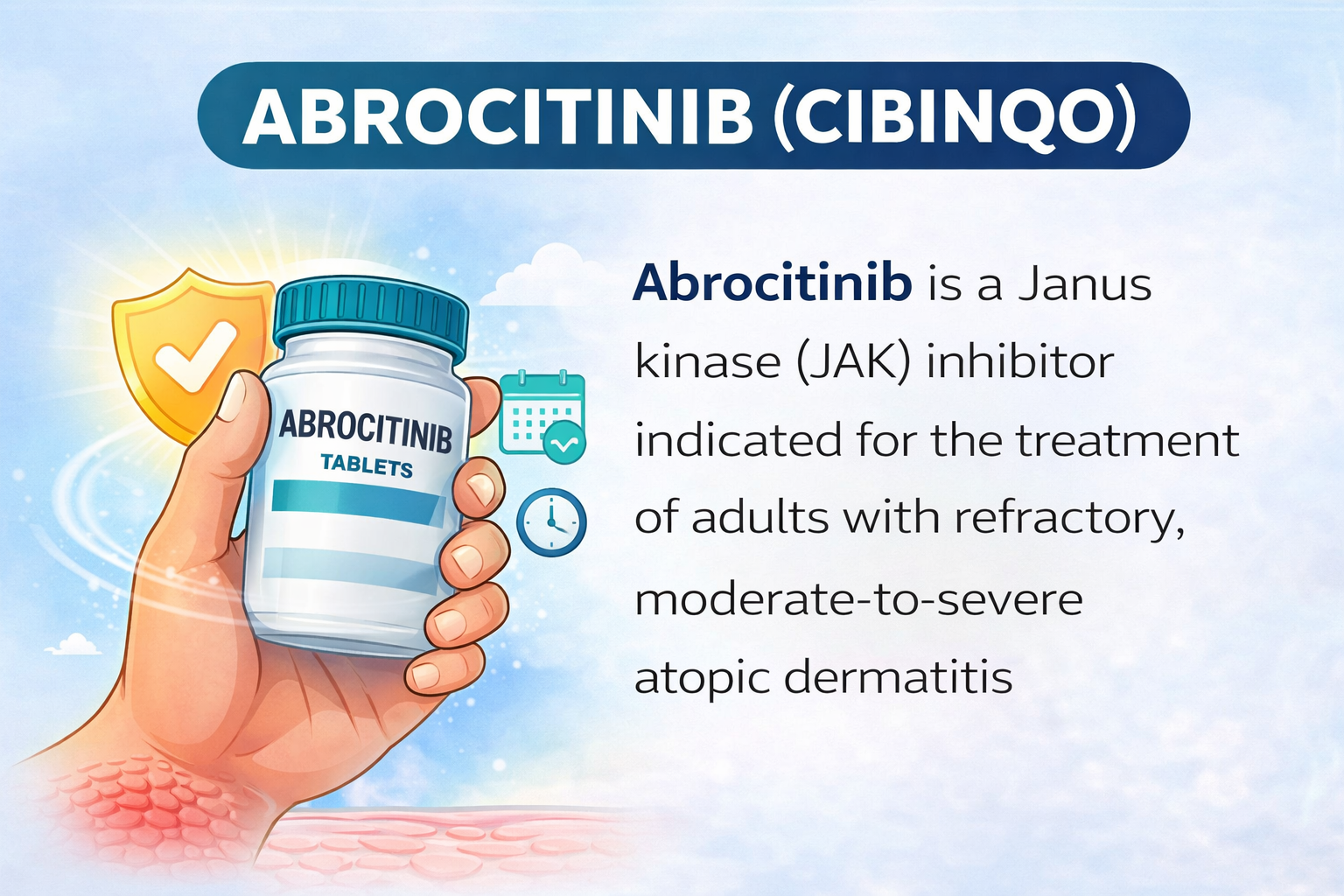
Refractory Moderate-to-Severe AD
Adults not adequately controlled with other systemic therapies including biologics, or when use is inadvisable
Mechanism
Selective JAK1 Inhibitor
Reversibly inhibits JAK1 at ATP binding site; 28-fold selectivity over JAK2, >340-fold over JAK3, 43-fold over TYK2
Starting Dose
100 mg QD
Escalate to 200 mg QD if inadequate response at 12 weeks; discontinue if no response at 200 mg
Formulation
Oral Tablet
50 mg, 100 mg, 200 mg pink film-coated tablets; taken once daily with or without food
Abrocitinib reversibly inhibits Janus kinase 1 (JAK1) by blocking the adenosine triphosphate (ATP) binding site. In a cell-free isolated enzyme assay, abrocitinib demonstrated selectivity for JAK1 over JAK2 (28-fold), JAK3 (>340-fold), and TYK2 (43-fold), as well as the broader kinome. Both the parent compound and its active metabolites (M1 and M2) inhibit JAK1 activity in vitro with similar levels of selectivity. JAK1 is a key signaling node downstream of cytokines central to atopic dermatitis pathophysiology, including IL-4, IL-13, IL-31, and TSLP.
Pharmacodynamic effect: Treatment with abrocitinib produces dose-dependent reduction in serum markers of inflammation including hsCRP, IL-31 (pruritus mediator), and TARC (CCL17). These effects return to near baseline within 4 weeks of drug discontinuation, consistent with the short elimination half-life of 3–5 hours.
Label note (Section 12.1): The relevance of inhibition of specific JAK enzymes to therapeutic effectiveness is not currently known per the prescribing information.
| Drug (Brand) | Target / Class | Route | FDA Approval | Population |
|---|
| Abrocitinib (CIBINQO) | JAK1 inhibitor — oral small molecule | Oral QD | Jan 14, 2022 | Adults — refractory moderate-to-severe AD |
| Dupilumab (Dupixent) | IL-4Rα antagonist — biologic | SC Q2W | Mar 28, 2017 | Adults, adolescents, children ≥6 months |
| Tralokinumab (Adbry) | IL-13 antagonist — biologic | SC Q2W | Dec 27, 2021 | Adults — moderate-to-severe AD |
| Lebrikizumab (Ebglyss) | IL-13 antagonist — biologic | SC Q2W/Q4W | May 13, 2024 | Adults and adolescents ≥12 years |
| Upadacitinib (Rinvoq) | JAK1 inhibitor — oral small molecule | Oral QD | Jan 14, 2022 | Adults and adolescents ≥12 years |
| Baricitinib (Olumiant) | JAK1/2 inhibitor — oral small molecule | Oral QD | May 13, 2022 | Adults — moderate-to-severe AD |
Total Randomized
1,615
Trial-AD-1 N=387 · Trial-AD-2 N=391 · Trial-AD-3 N=837
Mean Baseline Age
36 years
8% aged 12–<18 (adolescents; abrocitinib not approved for this group) · 6.1% aged ≥65
Mean Baseline EASI
30
64% IGA 3 (moderate) · 36% IGA 4 (severe)
Prior Systemic Therapy
>40%
In each trial; 6% prior dupilumab in Trial-AD-1 and Trial-AD-2
| Feature | Trial-AD-1 (NCT03349060) | Trial-AD-2 (NCT03575871) | Trial-AD-3 (NCT03720470) |
|---|
| Regimen type | Monotherapy | Monotherapy | Combination + background TCS |
| Duration | 12 weeks | 12 weeks | 16 weeks |
| Total N randomized and dosed | 387 | 391 | 837 |
| Abrocitinib 200 mg QD | N=154 | N=155 | N=226 |
| Abrocitinib 100 mg QD | N=156 | N=158 | N=238 |
| Placebo | N=77 | N=78 | N=131 |
| Active comparator | None | None | Dupilumab 300 mg Q2W SC (initial 600 mg Day 1) N=242 |
| Background therapy | None (monotherapy) | None (monotherapy) | TCS throughout all arms |
| Age eligibility | ≥12 years | ≥12 years | ≥18 years (adults only) |
| Prior dupilumab allowed | Yes (6% enrolled) | Yes (6% enrolled) | No (dupilumab-naive required) |
| Co-primary endpoints | IGA 0 or 1 (clear/almost clear; ≥2-point reduction from baseline) AND EASI-75 (≥75% improvement from baseline) — both assessed at Week 12 |
| Characteristic | Trial-AD-1 (N=387) | Trial-AD-2 (N=391) | Trial-AD-3 (N=837) |
|---|
| Mean age (years) | 36 years overall |
| Subjects aged 12–<18 years | Included (~8%) | Included (~8%) | Not enrolled |
| Subjects aged ≥65 years | 6.1% (94 subjects) across placebo-controlled pool |
| Male | 53% overall |
| Race — White | 69% overall (68.7% in placebo-controlled safety pool) |
| Baseline IGA 3 (moderate AD) | 64% overall |
| Baseline IGA 4 (severe AD) | 36% overall |
| Mean baseline EASI score | 30 |
| BSA involvement required | ≥10% at baseline |
| PP-NRS required | ≥4 at baseline (moderate-to-severe pruritus) |
| Prior systemic AD therapy | >40% | >40% | >40% |
| Prior dupilumab exposure | 6% | 6% | 0% (excluded) |
| Eligibility — prior therapy | Inadequate response to prior topical therapy, or topical therapy medically inadvisable, or prior systemic therapy failure |
| Characteristic | Abrocitinib 200 mg (N=590) | Abrocitinib 100 mg (N=608) | Placebo (N=342) |
|---|
| Median age (years) | 33.0 years |
| Subjects aged 12–<18 years | 124 subjects (8.1%) |
| Subjects aged ≥65 years | 94 subjects (6.1%) |
| Male | 53.9% |
| Race — White | 68.7% |
| Exposure duration (placebo-controlled) | Up to 16 weeks | Up to 16 weeks |
| Total abrocitinib exposure (all 5 trials) | 1,623 subjects · 1,428 patient-years · 634 subjects with ≥1 year exposure |
Subgroup analysis: Examination of age, gender, race, body weight, and previous systemic AD therapy (including prior dupilumab) did not identify clinically meaningful differences in response to abrocitinib 100 mg or 200 mg QD among subgroups in Trial-AD-1, Trial-AD-2, and Trial-AD-3.
Co-primary endpoints: IGA 0 or 1 (clear or almost clear; ≥2-point reduction from baseline on a 5-point scale) AND EASI-75 (≥75% improvement in EASI from baseline) — both assessed at Week 12. Non-responder imputation (NRI) was used for missing data. Family-wise error rate (FWER) controlled hierarchically across doses and endpoints.
Co-Primary Endpoints
IGA 0/1 & EASI-75
Assessed at Week 12 across all three pivotal trials
Trial Design
3 RCTs, DB, PC
2 monotherapy (12 wk) + 1 combination with TCS (16 wk); includes dupilumab arm in Trial-AD-3
Total Randomized
1,615
AD-1: N=387 · AD-2: N=391 · AD-3: N=837 (subjects ≥12 years)
Eligibility Criteria
IGA ≥3, EASI ≥16
BSA ≥10%, PP-NRS ≥4; inadequate response to prior topical therapy
Abrocitinib 200 mg QD (N=154)
Abrocitinib 100 mg QD (N=156)
Difference from placebo: 200 mg: 36% (95% CI: 26%–46%) · 100 mg: 16% (95% CI: 7%–25%)
Abrocitinib 200 mg QD (N=155)
Abrocitinib 100 mg QD (N=158)
Difference from placebo: 200 mg: 29% (95% CI: 19%–39%) · 100 mg: 19% (95% CI: 9%–29%)
200 mg QD — Trial-AD-1 (N=154)
100 mg QD — Trial-AD-1 (N=156)
Placebo — Trial-AD-1 (N=77)
AD-1: 200 mg diff from placebo 51% (40%–61%) · 100 mg diff 28% (18%–39%)
200 mg QD — Trial-AD-2 (N=155)
100 mg QD — Trial-AD-2 (N=158)
Placebo — Trial-AD-2 (N=78)
AD-2: 200 mg diff from placebo 50% (40%–61%) · 100 mg diff 33% (23%–44%)
Source: FDA Prescribing Information NDA 213871, Ref ID 4920574, Table 9, Section 14. Week 12 values are directly from Table 9 (200 mg: 62%, 100 mg: 40%, placebo: 12%). Baseline set to 0% (no subjects were EASI-75 responders at screening by definition). Intermediate timepoints (Week 2, 4, 8) are not explicitly reported in the PI or available Medical Review tables — these timepoints are omitted (null); use this chart for endpoint trend illustration only. For formally reported week-by-week figures, refer to the Clinical Study Report.
Trial-AD-1 results
Trial-AD-2 results
Abrocitinib 200 mg + TCS (N=226)
Abrocitinib 100 mg + TCS (N=238)
Diff from placebo: 200 mg: 34% (95% CI: 25%–42%) · 100 mg: 23% (95% CI: 15%–31%)
Abrocitinib 200 mg + TCS (N=226)
Abrocitinib 100 mg + TCS (N=238)
Diff from placebo: 200 mg: 41% (95% CI: 32%–51%) · 100 mg: 32% (95% CI: 22%–41%)
Active Comparator Note (Trial-AD-3): Trial-AD-3 included a dupilumab arm (300 mg Q2W SC with initial 600 mg loading dose + background TCS; N=242). The trial was not powered or designed for a direct head-to-head statistical comparison of abrocitinib vs. dupilumab. Dupilumab efficacy data in this trial are not reported in the PI tables and are outside the scope of the FDA-approved label for abrocitinib.
| PRO Instrument | Finding | Timepoint |
|---|
| PP-NRS4 (≥4-point improvement in itch) | 200 mg: 30%, 100 mg: 14%, placebo: 8% in Trial-AD-3 combination therapy | Week 2 |
| PP-NRS improvement (monotherapy) | Higher proportion achieving itch improvement with both doses vs placebo across Trial-AD-1 and Trial-AD-2 | Week 12 |
⚠ BOXED WARNING — Serious Infections · Mortality · Malignancy · Major Adverse Cardiovascular Events (MACE) · Thrombosis:
Increased risk of serious bacterial, fungal, viral and opportunistic infections. Higher rate of all-cause mortality, lymphoma, lung cancer, MACE (CV death, MI, stroke), and thrombosis (PE, DVT, arterial) observed with another JAK inhibitor vs TNF blockers in RA patients ≥50 years. Abrocitinib is NOT approved for RA. Screen for TB before and during therapy; treat latent TB prior to use. Discontinue if serious or opportunistic infection, MI, or stroke occurs.
Total Exposed (All 5 Trials)
1,623
Moderate-to-severe AD · 1,428 patient-years · 634 subjects with ≥1 year
Placebo-Controlled Pool
1,198
608 on 100 mg · 590 on 200 mg · up to 16 weeks
Overall Infection Rate (16 wk)
168.8
Per 100 PY (100 mg); 159.5/100 PY (200 mg) vs 126.8/100 PY (placebo)
Discontinuation Due to AEs
5.1%
61/1,198 subjects treated with abrocitinib discontinued due to adverse reactions
- Serious Infections (§5.1): Increased risk including TB, invasive fungal infections, herpes zoster, herpes simplex, pneumonia, HBV reactivation. Screen for TB and viral hepatitis before initiation. Avoid in active infection. If serious infection develops, discontinue. Most common serious infections in AD trials: herpes simplex, herpes zoster, pneumonia.
- Mortality (§5.2): Higher rate of all-cause mortality including sudden CV death observed with another JAK inhibitor vs TNF blockers in RA patients ≥50 years with ≥1 CV risk factor. Consider benefits and risks prior to initiating or continuing therapy.
- Malignancy & Lymphoproliferative Disorders (§5.3): Malignancies including NMSC observed in AD trials. Higher rate of malignancy (excluding NMSC) and lymphoma observed with another JAK inhibitor vs TNF blockers in RA. Periodic skin examination recommended; limit UV exposure.
- Major Adverse Cardiovascular Events (§5.4): MACE (CV death, non-fatal MI, non-fatal stroke) reported in AD trials. Higher rate with another JAK inhibitor vs TNF blockers in RA. Discontinue if MI or stroke occurs. Counsel current/past smokers on increased risk.
- Thrombosis (§5.5): DVT and PE observed in AD trials (200 mg only). Avoid in patients at increased thrombosis risk. Discontinue if symptoms of thrombosis occur.
- Laboratory Abnormalities (§5.6): Thrombocytopenia and lymphopenia associated with abrocitinib. Dose-dependent lipid elevations. CBC at baseline, 4 weeks after initiation, 4 weeks after dose increase. Lipids at ~4 weeks.
- Immunizations (§5.7): Avoid live vaccines immediately prior to, during, and immediately after abrocitinib. Complete vaccinations including herpes zoster vaccine before starting.
| Adverse Reaction | Abrocitinib 200 mg (N=590) | Abrocitinib 100 mg (N=608) | Placebo (N=342) |
|---|
| Nasopharyngitis | 8.7% | 12.4% | 7.9% |
| Nausea | 14.5% | 6.0% | 2.1% |
| Headache | 7.8% | 6.0% | 3.5% |
| Herpes simplex (incl. oral, ophthalmic, genital, herpes dermatitis) | 4.2% | 3.3% | 1.8% |
| Increased blood creatinine phosphokinase | 2.9% | 2.3% | 1.5% |
| Dizziness | 2.9% | 1.8% | 0.9% |
| Urinary tract infection | 2.2% | 1.7% | 1.2% |
| Fatigue | 1.3% | 1.6% | 0.5% |
| Acne | 4.7% | 1.6% | 0% |
| Vomiting | 3.2% | 1.5% | 0.9% |
| Impetigo | 0.5% | 1.5% | 0.3% |
| Oropharyngeal pain | 1.0% | 1.4% | 0.6% |
| Hypertension | 0.8% | 1.2% | 0.7% |
| Influenza | 1.1% | 1.2% | 0% |
| Gastroenteritis | 1.3% | 1.1% | 0.6% |
| Dermatitis contact | 0.5% | 1.1% | 0.3% |
| Abdominal pain upper | 1.9% | 0.6% | 0% |
| Abdominal discomfort | 1.2% | 0.5% | 0.3% |
| Herpes zoster | 1.2% | 0.3% | 0% |
| Thrombocytopenia | 1.5% | 0% | 0% |
Serious Infections
16-wk placebo-controlled: 100 mg: 6 subjects (3.9/100 PY) · 200 mg: 2 subjects (1.3/100 PY) · Placebo: 2 subjects (2.6/100 PY). All 5 trials: 100 mg: 18 subjects (2.3/100 PY) · 200 mg: 16 subjects (2.3/100 PY). Most common: herpes simplex, herpes zoster, pneumonia.
Herpes Zoster (all 5 trials incl. LTE)
200 mg: 35 subjects (5.2/100 PY) · 100 mg: 16 subjects (2.0/100 PY) · Placebo: 0 subjects. Geriatric patients (≥65 years): 7.40/100 PY vs 3.44/100 PY in adults aged 18–<65. Consider interrupting abrocitinib until herpes zoster episode resolves.
Thrombocytopenia (dose-dependent)
Transient, dose-dependent decrease in platelet count; nadir at median 24 days after 200 mg QD. ~40% recovery by 12 weeks without discontinuation. Thrombocytopenia AE: 200 mg 0.9/100 PY · 100 mg: none. Contraindicated with antiplatelet drugs (first 3 months).
Thrombosis — PE & DVT (all trials)
PE: 3 subjects (0.4/100 PY) — all 200 mg only. DVT: 2 subjects (0.3/100 PY) — all 200 mg only. No thrombosis observed in 100 mg arm. Boxed Warning applies to class.
MACE (all 5 trials)
100 mg: 1 subject (0.1/100 PY) · 200 mg: 2 subjects (0.3/100 PY). Boxed Warning: higher MACE with another JAK inhibitor vs TNF blockers in RA. Discontinue if MI or stroke occurs.
Lipid Elevations (dose-dependent)
Dose-related increase in LDL-c, total cholesterol, and HDL-c from Week 4, maintained through final visit. Hyperlipidemia AE: 100 mg 0.6/100 PY · 200 mg 2.0/100 PY. Monitor lipids ~4 weeks after initiation.
Malignancy (all 5 trials incl. LTE)
100 mg: 4 subjects (0.5/100 PY) · 200 mg: 2 subjects (0.3/100 PY). 16-wk placebo-controlled: 1 subject (0.65/100 PY) on 200 mg only; none on 100 mg or placebo.
Retinal Detachment
16-wk placebo-controlled: 1 subject (0.6/100 PY) on 100 mg. All 5 trials: 2 subjects (0.3/100 PY) on 100 mg. Advise patients to report sudden vision changes immediately.
| Laboratory Parameter | Abrocitinib 200 mg | Abrocitinib 100 mg | Placebo | Notes |
|---|
| Thrombocytopenia (AE) | 0.9/100 PY (all trials) | None | None | Dose-dependent; nadir at median 24 days; ~40% recovery by 12 wks without DC |
| ALC <500/mm³ (confirmed) | 1.2/100 PY (16 wk) | None | None | Both cases in first 4 weeks; confirmed ALC <500 only in ≥65 age group in LTE |
| LDL-c / total cholesterol elevation | Dose-related increase from Wk 4 | Dose-related increase from Wk 4 | No increase | Hyperlipidemia AE: 200 mg 2.0/100 PY; 100 mg 0.6/100 PY; CV significance not determined |
| Blood CPK elevation (AE) | 12.3/100 PY (16 wk) | 6.9/100 PY (16 wk) | 7.5/100 PY | Most elevations transient; no rhabdomyolysis reported |
| Platelet count <75,000/mm³ | Higher proportion ≥65 yrs | Higher proportion ≥65 yrs | — | Geriatric population at higher risk; monitor more closely |
| Population | Safety Data |
|---|
| Pregnancy | Insufficient clinical data. Animal data: skeletal variations and maternal dystocia in rats at 14× MRHD; embryofetal lethality at 22× MRHD. No effects in rabbits up to 5× MRHD. Pregnancy registry: 1-877-311-3770. |
| Lactation | Not recommended during treatment and for 1 day after last dose (~5–6 elimination half-lives). Abrocitinib AUC in rat milk ~5× plasma. No human data on presence in breast milk. |
| Females of reproductive potential | May impair female fertility based on rat data (reversible within 1 month of cessation at 39× MRHD). Counsel patients. |
| Pediatric (<18 years) | Safety and effectiveness not established. Irreversible femoral head abnormalities at all dose levels in juvenile rats (≥5 mg/kg/day; 1.1× MRHD). Not recommended in pediatric patients. |
| Geriatric (≥65 years) | 145 patients ≥65 enrolled (4.6%); 25 patients ≥75 (0.8%). Higher discontinuation rate. Higher HZ incidence: 7.40 vs 3.44/100 PY. Only age group with confirmed ALC <500/mm³ and higher proportion platelets <75,000/mm³. |
Carcinogenicity (2-year oral rat study)
Increased benign thymomas in female rats at 10 mg/kg/day (4× MRHD) and 30 mg/kg/day (19× MRHD). Not carcinogenic in female rats at 3 mg/kg/day (0.8× MRHD) or male rats at all doses up to 30 mg/kg/day (19× MRHD).
Carcinogenicity (Tg.rasH2 mice)
Not carcinogenic at up to 60 mg/kg/day in males and 75 mg/kg/day in females.
Genotoxicity
Not mutagenic in Ames assay. Aneugenic in in vitro TK6 micronucleus assay — NOT aneugenic or clastogenic in in vivo rat bone marrow micronucleus assay (negative in vivo result).
Cardiac Safety (QTc)
At 3× maximum approved recommended dose, abrocitinib does not prolong the QT interval to any clinically relevant extent.
Tmax
~1 hour
Peak plasma concentrations reached within 1 hour of oral administration
Bioavailability
~60%
Absolute oral bioavailability ~60%; oral absorption >91%
Elimination t½
3–5 hours
Mean elimination half-life of abrocitinib and active metabolites M1 and M2
Volume of Distribution
~100 L
After IV administration; distributes equally between red blood cells and plasma
Protein Binding
64% (parent)
Abrocitinib ~64% bound; M1 ~37%; M2 ~29%; primarily albumin
Steady-State
48 hours
Steady-state plasma concentrations achieved within 48 hours of once-daily dosing
Primary Metabolism
CYP2C19
CYP2C19 (~53%), CYP2C9 (~30%), CYP3A4 (~11%), CYP2B6 (~6%)
Urine Excretion
<1%
Unchanged drug; metabolites M1 and M2 excreted predominantly in urine via OAT3
Active Metabolites
M1 + M2
Parent ~60%, M2 ~30%, M1 ~10% of pharmacologic activity (unbound, potency-adjusted)
Food effect: High-fat, high-calorie meal (916 cal: ~55% fat, 29% CHO, 16% protein) increased AUC ~26% and Cmax ~29%, and prolonged Tmax by ~2 hours. These changes are not clinically relevant — abrocitinib can be administered with or without food. Dose proportionality observed for Cmax and AUC up to 200 mg.
| Enzyme / Metabolite | Detail |
|---|
| CYP2C19 | Primary metabolic enzyme (~53% contribution to clearance) |
| CYP2C9 | Secondary metabolic enzyme (~30% contribution) |
| CYP3A4 | Minor metabolic enzyme (~11% contribution) |
| CYP2B6 | Minor metabolic enzyme (~6% contribution) |
| M1 (3-hydroxypropyl) | Active metabolite; less active than abrocitinib; contributes ~10% of pharmacologic activity (unbound, potency-adjusted) |
| M2 (2-hydroxypropyl) | Active metabolite; as active as parent; contributes ~30% of pharmacologic activity (unbound, potency-adjusted) |
| Combined exposure | Sum of unbound exposures of abrocitinib, M1 and M2 (each in molar units, adjusted for relative potencies) — used as reference for PK studies |
| CYP inhibition/induction (in vitro) | Abrocitinib and metabolites M1/M2 are NOT inhibitors or inducers of CYP1A2, CYP2B6, CYP2C8, CYP2C9, CYP2C19, CYP2D6, or CYP3A4 |
| UGT inhibition/induction (in vitro) | Not inhibitors or inducers of UGT1A1, UGT1A4, UGT1A6, UGT1A9, or UGT2B7 |
| Transporter | Abrocitinib is an inhibitor of OCT1; NOT an inhibitor of OATP1B1/1B3, BSEP, OAT1, or OCT2 |
| Population | Effect on Combined Exposure (AUCinf,u) | Clinical Action |
|---|
| Moderate renal impairment (eGFR 30–59 mL/min) | ↑110% vs normal renal function (eGFR ≥90 mL/min) | Reduce dose to 50 mg QD; may escalate to 100 mg QD if inadequate response at 12 wks |
| Severe renal impairment (eGFR <30 mL/min) / ESRD | ↑191% vs normal renal function | Not recommended for use (including patients on renal replacement therapy) |
| Mild renal impairment (eGFR 60–89 mL/min) | Clinically significant increase not expected | No dose adjustment; standard 100 mg QD |
| Mild hepatic impairment (Child Pugh A) | ↓4% vs normal hepatic function | No dose adjustment required |
| Moderate hepatic impairment (Child Pugh B) | ↑15% vs normal hepatic function | No dose adjustment required |
| Severe hepatic impairment (Child Pugh C) | Not studied | Avoid use |
| CYP2C19 poor metabolizers | AUC of abrocitinib 2.3-fold higher vs normal metabolizers (single dose, dose-normalized) | Start 50 mg QD; may escalate to 100 mg QD if inadequate response at 12 wks. Prevalence: ~3–5% Caucasians/Blacks; ~15–20% Asians |
| Body weight, sex, race, age | No clinically meaningful effect on abrocitinib exposure | No dose adjustment based on these factors |
| Interacting Drug / Class | Mechanism | Effect on Combined Abrocitinib Exposure (AUCinf,u) | Clinical Recommendation |
|---|
| Strong CYP2C19 inhibitors (e.g., fluvoxamine) | Reduced metabolic clearance | ↑1.91-fold (90% CI: 1.74–2.10) — fluvoxamine 50 mg QD × 9 days | Reduce dose to 50 mg QD; may escalate to 100 mg QD if inadequate response at 12 wks |
| Moderate-to-strong inhibitors of both CYP2C19 and CYP2C9 (e.g., fluconazole) | Dual CYP inhibition | ↑2.55-fold (90% CI: 2.42–2.69); parent alone ↑4.8-fold — fluconazole 400 mg Day 1, 200 mg Days 2–7 | Avoid concomitant use |
| Strong CYP2C19 or CYP2C9 inducers (e.g., rifampin) | Increased metabolic clearance | ↓0.44-fold (56% reduction) — rifampin 600 mg QD × 8 days | Avoid concomitant use |
| OAT3 inhibitors (e.g., probenecid) | Inhibition of metabolite renal transport | ↑1.66-fold — probenecid 1,000 mg BID × 3 days | Not considered clinically significant; no dose adjustment |
| Sensitive P-gp substrates (e.g., dabigatran, digoxin) | Abrocitinib inhibits P-gp efflux | Dabigatran AUC ↑53%, Cmax ↑40% (abrocitinib 200 mg single dose) | Monitor appropriately or dose-titrate P-gp substrates with narrow therapeutic index (e.g., digoxin); dabigatran increase not clinically significant on its own |
| Antiplatelet therapy drugs | Additive bleeding risk with thrombocytopenia | Increased risk of bleeding | Contraindicated during first 3 months of treatment (except low-dose aspirin ≤81 mg/day) |
Abrocitinib is a Janus kinase (JAK) inhibitor that reversibly inhibits JAK1 by blocking the adenosine triphosphate (ATP) binding site. In a cell-free isolated enzyme assay, abrocitinib was selective for JAK1 over JAK2 (28-fold), JAK3 (>340-fold), and TYK2 (43-fold). Both the parent compound and active metabolites M1 and M2 inhibit JAK1 in vitro with similar selectivity. JAK inhibition modulates the signaling of multiple cytokines implicated in atopic dermatitis pathophysiology, including IL-4, IL-13, IL-31, and TSLP. The relevance of inhibition of specific JAK enzymes to therapeutic effectiveness is not currently known per the prescribing information.
| PD Parameter | Finding |
|---|
| hsCRP (high-sensitivity C-reactive protein) | Dose-dependent reduction; returns to near baseline within 4 weeks of discontinuation |
| IL-31 (pruritus mediator) | Dose-dependent reduction; key mediator of pruritus in atopic dermatitis |
| TARC (CCL17; Th2 chemokine) | Dose-dependent reduction; marker of Th2-driven AD activity |
| Platelet count effect | Transient, dose-dependent decrease; nadir at median 24 days (200 mg QD); percent change from baseline nadir: −41.2% (baseline 170×10³/mm³), −33.4% (baseline 220×10³/mm³), −26.5% (baseline 270×10³/mm³); ~40% recovery by 12 weeks without discontinuation |
| Cardiac electrophysiology (QTc) | At 3× maximum approved recommended dose, no clinically relevant QT prolongation |
Starting Dose
100 mg QD
Oral once daily; with or without food; whole tablet — do not crush, split, or chew
Route
Oral
Tablet with water; same time each day
Escalation Dose
200 mg QD
If inadequate response to 100 mg after 12 weeks; discontinue if no response at 200 mg
Concomitant Therapy
TCS Optional
Can be used with or without topical corticosteroids
Standard Dosing Regimen
- Start: 100 mg orally once daily (with or without food)
- Assess at Week 12 — if inadequate response, increase to 200 mg once daily
- If inadequate response after escalation to 200 mg — discontinue therapy
- Can be used with or without topical corticosteroids
- Swallow whole with water — do not crush, split, or chew
- Missed dose: take ASAP unless <12 hours before next dose; skip and resume at scheduled time
Pre-Treatment Evaluations Required (§2.1)
- TB infection evaluation — do not initiate if active TB; start preventive latent TB therapy prior to abrocitinib
- Viral hepatitis screening (HBV, HCV) per clinical guidelines — do not initiate if active hepatitis B or C
- CBC — do not initiate if platelets <150,000/mm³, ALC <500/mm³, ANC <1,000/mm³, or Hb <8 g/dL
- Complete age-appropriate immunizations including herpes zoster vaccine before starting
Dose Modifications — Special Populations
- Mild renal (eGFR 60–89 mL/min): 100 mg QD (no adjustment)
- Moderate renal (eGFR 30–59 mL/min): 50 mg QD; may increase to 100 mg QD if inadequate response at 12 wks
- Severe renal / ESRD (eGFR <30 mL/min): Not recommended
- Mild or moderate hepatic (Child Pugh A/B): No dose adjustment
- Severe hepatic (Child Pugh C): Avoid use
- CYP2C19 poor metabolizers: Start 50 mg QD; may increase to 100 mg QD if inadequate response at 12 wks
- Strong CYP2C19 inhibitors: Reduce to 50 mg QD; may escalate to 100 mg QD if inadequate response at 12 wks
- Moderate-to-strong inhibitors of both CYP2C19 and CYP2C9: Avoid concomitant use
- Strong CYP2C19 or CYP2C9 inducers: Avoid concomitant use
Hematologic Discontinuation Thresholds (§2.6)
- Platelets <50,000/mm³: Discontinue; follow CBC until >100,000/mm³ before restarting
- ALC <500/mm³: Temporarily discontinue; restart when ALC returns above threshold
- ANC <1,000/mm³: Temporarily discontinue; restart when ANC returns above threshold
- Hb <8 g/dL: Temporarily discontinue; restart when Hb returns above threshold
- CBC monitoring: baseline, 4 weeks after initiation, 4 weeks after any dose increase
- Lipids: assess at ~4 weeks; manage per clinical guidelines for hyperlipidemia
Contraindication: Abrocitinib is contraindicated in patients taking antiplatelet therapies, except for low-dose aspirin (≤81 mg daily), during the first 3 months of treatment. Concomitant use of abrocitinib with antiplatelet drugs (other than low-dose aspirin) during the first 3 months increases the risk of bleeding due to thrombocytopenia.
- Serious Infections (§5.1): Avoid in active, serious infection. Screen for TB before initiating and consider yearly screening in highly endemic areas. Screen for viral hepatitis per clinical guidelines. Monitor for HBV DNA in patients with inactive HBV. If serious infection develops, discontinue and treat appropriately.
- Mortality (§5.2): Higher all-cause mortality with another JAK inhibitor vs TNF blockers in RA. Consider benefits and risks for each individual patient prior to initiating or continuing therapy.
- Malignancy (§5.3): Perform periodic skin examinations. Limit UV exposure; use broad-spectrum sunscreen. Consider benefits and risks particularly in current/past smokers or patients with known malignancy.
- MACE (§5.4): Patients should be informed of symptoms of cardiovascular events. Discontinue if MI or stroke occurs. Use with caution in patients with cardiovascular risk factors or who are current/past smokers.
- Thrombosis (§5.5): Avoid in patients at increased risk of thrombosis. If symptoms of DVT or PE occur, discontinue and evaluate/treat appropriately.
- Laboratory Abnormalities (§5.6): CBC at baseline, 4 weeks, and after dose increase. Lipid panel at ~4 weeks; manage hyperlipidemia per clinical guidelines. Abrocitinib initiation not recommended if platelets <150,000/mm³, ALC <500/mm³, ANC <1,000/mm³, or Hb <8 g/dL.
- Immunizations (§5.7): Complete all age-appropriate vaccinations including prophylactic herpes zoster vaccinations before starting abrocitinib. Avoid live vaccines immediately prior to, during, and immediately after treatment.
| Interacting Drug / Class | Dose Adjustment Required |
|---|
| Strong CYP2C19 inhibitors (e.g., fluvoxamine) | Reduce to 50 mg QD; escalate to 100 mg QD only after 12 weeks if inadequate response |
| Moderate-to-strong inhibitors of both CYP2C19 and CYP2C9 (e.g., fluconazole) | Avoid concomitant use |
| Strong CYP2C19 or CYP2C9 inducers (e.g., rifampin) | Avoid concomitant use |
| P-gp substrates with narrow therapeutic index (e.g., digoxin) | Monitor appropriately or dose-titrate P-gp substrate |
| Antiplatelet therapy (other than low-dose aspirin) | Contraindicated during first 3 months of treatment |
| Parameter | Recommendation |
|---|
| Route of administration | Oral |
| Food restriction | None — administer with or without food |
| Tablet handling | Swallow whole with water; do not crush, split, or chew |
| Timing | Approximately the same time each day |
| Missed dose | Take as soon as possible unless <12 hours before next scheduled dose — in that case, skip missed dose and resume normal schedule |
| Concomitant topical therapy | May be used with or without topical corticosteroids |
| Tablet storage | 20°C–25°C (68°F–77°F); excursions permitted 15°C–30°C; keep in original child-resistant container |
| Population | Recommendation |
|---|
| Pregnancy | Insufficient data to establish drug-associated risk. Pregnancy registry: 1-877-311-3770 or www.cibinqopregnancyregistry.com. Animal: skeletal variations and maternal dystocia in rats at 14× MRHD; no adverse effects in rabbits up to 5× MRHD. |
| Lactation | Not recommended during treatment and for 1 day after last dose (~5–6 elimination half-lives). Abrocitinib AUC in rat milk ~5× plasma. No human data. |
| Females of reproductive potential | May impair female fertility (reversible in rats within 1 month of cessation). Counsel patients regarding fertility risk. |
| Pediatric (<18 years) | Safety and effectiveness not established. Irreversible femoral head abnormalities at all dose levels in juvenile rats. Not approved for pediatric use. |
| Geriatric (≥65 years) | 145 patients ≥65 (4.6%) enrolled in trials. Higher discontinuation rate, higher HZ incidence, confirmed ALC <500/mm³ only in ≥65 age group. Use with caution; same dosing as general adult population. |
| Renal impairment (mild, eGFR 60–89) | No dose adjustment required — 100 mg QD standard dosing |
| Renal impairment (moderate, eGFR 30–59) | 50 mg QD; escalate to 100 mg QD if inadequate response at 12 weeks |
| Renal impairment (severe/ESRD, eGFR <30 or dialysis) | Not recommended for use |
| Hepatic impairment (mild/moderate, Child Pugh A/B) | No dose adjustment required |
| Hepatic impairment (severe, Child Pugh C) | Avoid use |
| CYP2C19 poor metabolizers | Start 50 mg QD; may escalate to 100 mg QD if inadequate response at 12 weeks |
Application Type
NDA 505(b)(1)
New Drug Application — oral small molecule
Review Designation
Standard Review
No Priority Review, Breakthrough Therapy, or Fast Track designation noted in PI
Approval Date
Jan 14, 2022
Initial U.S. approval for refractory moderate-to-severe AD in adults
Label Revision
01/2022
Initial PI revised January 2022 — verify current labeling at FDA.gov/drugsatfda
| Parameter | Value |
|---|
| Application Number | NDA 213871 |
| Application Type | NDA 505(b)(1) |
| Applicant | Pfizer Labs, Division of Pfizer Inc., New York, NY 10017 |
| Approval Date | January 14, 2022 |
| Review Type | Standard Review |
| Breakthrough Therapy Designation | Not reported in PI |
| Fast Track Designation | Not reported in PI |
| Advisory Committee | Not reported in PI |
| PI Reference ID | 4920574 |
| Approved Indication | Adults with refractory, moderate-to-severe atopic dermatitis whose disease is not adequately controlled with other systemic drug products, including biologics, or when use of those therapies is inadvisable |
| Limitation of Use | Not recommended for use in combination with other JAK inhibitors, biologic immunomodulators, or other immunosuppressants |
2017–2018
Early Clinical Development
Phase 1 and Phase 2 dose-ranging studies established the pharmacokinetic and pharmacodynamic profile of abrocitinib, informing the dose selection of 100 mg and 200 mg for Phase 3. Dose-ranging trial (one of 4 placebo-controlled studies in the safety pool) conducted during this period.
2018 — NCT03349060
Trial-AD-1 Initiated — Phase 3 Monotherapy
Randomized, double-blind, placebo-controlled 12-week monotherapy trial enrolling subjects ≥12 years with moderate-to-severe AD. N=387 randomized across abrocitinib 200 mg QD, 100 mg QD, and placebo. Co-primary endpoints: IGA 0/1 and EASI-75 at Week 12.
2018 — NCT03575871
Trial-AD-2 Initiated — Phase 3 Monotherapy
Second randomized, double-blind, placebo-controlled 12-week monotherapy trial (N=391, subjects ≥12 years). Replicates Trial-AD-1 design to confirm efficacy across doses.
2018 — NCT03720470
Trial-AD-3 Initiated — Phase 3 Combination + Active Comparator
16-week randomized, double-blind, placebo-controlled combination therapy trial in adults (≥18 years) with background TCS (N=837). Included dupilumab active comparator arm (300 mg Q2W, initial 600 mg). Total 4 arms. Dupilumab-naive population.
2020–2021
Phase 3 Trials Completed — NDA 213871 Submitted
All 3 pivotal trials completed with positive co-primary endpoint results at Week 12. Pfizer submitted NDA 213871 to the FDA. Data package included 3 pivotal RCTs, 1 dose-ranging placebo-controlled study, and a long-term extension trial (1,623 subjects total; 1,428 patient-years of exposure; 634 subjects with ≥1 year).
January 14, 2022
FDA Approval — Abrocitinib (CIBINQO) Tablets
Approved for adults with refractory, moderate-to-severe atopic dermatitis whose disease is not adequately controlled with other systemic drug products, including biologics, or when use of those therapies is inadvisable. Available as 50 mg, 100 mg, and 200 mg oral tablets. Co-approved on same date as upadacitinib for AD indication.
January 2022
PI Published with Boxed Warning (Ref ID: 4920574)
Full prescribing information issued including Boxed Warning for serious infections, mortality, malignancy, MACE, and thrombosis consistent with the JAK inhibitor class. Revised 01/2022.
Ongoing
Post-Marketing Activities
Long-term extension trial safety data collection ongoing. Pregnancy exposure registry active (1-877-311-3770 or www.cibinqopregnancyregistry.com). Pediatric development program ongoing — pediatric use not approved; irreversible juvenile bone findings observed in juvenile animal toxicology studies.
Postmarketing note: Specific PMR/PMC identifiers and study protocols are not explicitly listed in the prescribing information (Ref ID 4920574). The pregnancy exposure registry and ongoing long-term extension safety monitoring are ongoing commitments. For current PMR/PMC status, consult FDA Drugs@FDA (NDA 213871).
| Commitment Type | Details |
|---|
| Pregnancy Exposure Registry | Active registry monitoring pregnancy outcomes in women exposed to abrocitinib during pregnancy. Registry contact: 1-877-311-3770 or www.cibinqopregnancyregistry.com |
| Long-Term Extension Safety Data | Ongoing collection per Section 6.1 — 1,623 subjects, 1,428 patient-years accumulated at time of NDA approval |
| Pediatric Development | Safety and effectiveness not established in pediatric patients; pediatric program ongoing. Irreversible juvenile bone findings (femoral head abnormalities) represent key safety signal for pediatric labeling. |
| Domain | Note |
|---|
| Benefit-risk conclusion | FDA approved abrocitinib as the first selective JAK1 inhibitor for refractory moderate-to-severe AD in adults, based on consistent efficacy across 3 pivotal RCTs and acceptable safety profile with risk mitigation measures (Boxed Warning, hematologic monitoring, vaccination requirements, antiplatelet contraindication) |
| Boxed Warning class labeling | Abrocitinib carries the full JAK inhibitor class Boxed Warning for serious infections, mortality, malignancy (lymphoma, lung cancer), MACE, and thrombosis — consistent with the FDA’s requirement for all JAK inhibitors following the tofacitinib ORAL Surveillance postmarketing safety study findings |
| Pediatric restriction | Despite enrollment of subjects aged 12–17 years in Trial-AD-1 and Trial-AD-2 (8.1%), abrocitinib is not approved for pediatric use due to concerns from irreversible femoral head abnormalities observed in juvenile rat toxicology studies |
| Antiplatelet contraindication | First 3 months contraindication with antiplatelet agents (except low-dose aspirin ≤81 mg/day) is unique to abrocitinib among JAK inhibitors — reflects mechanism-based thrombocytopenic effect of JAK1 inhibition on megakaryocyte signaling |
| Limitation of use | Not recommended in combination with other JAK inhibitors, biologic immunomodulators, or immunosuppressants |
| PI Reference | FDA Prescribing Information NDA 213871, Ref ID 4920574, Revised 01/2022. Note: label may have been updated — for current labeling visit https://www.fda.gov/drugsatfda or www.pfizer.com |
| Study | Finding |
|---|
| Carcinogenicity — 2-year oral (rats) | Increased benign thymomas in female rats at 10 mg/kg/day (4× MRHD) and 30 mg/kg/day (19× MRHD). Not carcinogenic in female rats at 3 mg/kg/day (0.8× MRHD) or male rats up to 30 mg/kg/day (19× MRHD). |
| Carcinogenicity — Tg.rasH2 mice | Not carcinogenic at up to 60 mg/kg/day (males) and 75 mg/kg/day (females). |
| Genotoxicity — Ames assay | Not mutagenic. |
| Genotoxicity — in vitro TK6 micronucleus | Aneugenic in vitro. However, NOT aneugenic or clastogenic in in vivo rat bone marrow micronucleus assay (negative in vivo result is reassuring). |
| Male fertility (rats) | No impairment at doses up to 70 mg/kg/day (35× MRHD). |
| Female fertility (rats) | Impaired at 70 mg/kg/day (39× MRHD) — reduced fertility index, corpora lutea, implantation sites. Reversible within 1 month of cessation. No impairment at 10 mg/kg/day (3× MRHD). |
| Embryofetal development — rats | Skeletal variations (short 13th ribs) at 30 mg/kg/day (14× MRHD); increased embryofetal lethality and additional skeletal variations at 60 mg/kg/day (22× MRHD). No fetal malformations at any dose. |
| Embryofetal development — rabbits | No maternal or developmental toxicity at doses up to 75 mg/kg/day (5× MRHD). |
| Pre-/postnatal development (rats) | Maternal dystocia and reduced offspring weight at 30 mg/kg/day (14× MRHD). Postnatal survival markedly decreased at 60 mg/kg/day (22× MRHD). No effects at 10 mg/kg/day (3× MRHD). |
| Juvenile animal toxicology (rats) | Reversible decrease in primary spongiosa. IRREVERSIBLE femoral head abnormalities (small/misshapen) at all dose levels ≥5 mg/kg/day (1.1× MRHD). Irreversible femur size decrease, paw malrotation, limb impairment at ≥25 mg/kg/day (10× MRHD). Bone findings not observed in older animals. This finding precluded pediatric approval. |
| Document | Reference / Source |
|---|
| Prescribing Information (Label) | NDA 213871 · Ref ID: 4920574 · Revised 01/2022 |
| Drugs@FDA | https://www.accessdata.fda.gov/scripts/cder/daf/index.cfm?event=overview.process&ApplNo=213871 |
| Pivotal Trial — Monotherapy 1 | Trial-AD-1 · NCT03349060 · ClinicalTrials.gov |
| Pivotal Trial — Monotherapy 2 | Trial-AD-2 · NCT03575871 · ClinicalTrials.gov |
| Pivotal Trial — Combination Therapy | Trial-AD-3 · NCT03720470 · ClinicalTrials.gov (includes dupilumab active comparator) |
| Manufacturer | Pfizer Labs, Division of Pfizer Inc. · New York, NY 10017 |
| NDC — 50 mg (30-count bottle) | 0069-0235-30 |
| NDC — 100 mg (30-count bottle) | 0069-0335-30 |
| NDC — 200 mg (30-count bottle) | 0069-0435-30 |
| Storage | 20°C–25°C (68°F–77°F); excursions 15°C–30°C (59°F–86°F) permitted; child-resistant container; keep in original package |